


- Clearity Health Review: What It Does, What It Costs, and Who It’s For - September 6, 2026
- JG Wentworth Alternatives: What to Know Before Selling Structured Settlement Payments - April 6, 2026
- Best Factoring Companies for Structured Settlements - March 18, 2026
FTC Disclaimer: We do make money from this blog and may receive compensation for this work in the form of commissions, fees, and complimentary product access. Review our full FTC disclosure here.
Medical bills have a special way of making even organized people feel like they have no idea what is going on.
The most overwhelming part isn’t necessarily the amount; it’s trying to figure out what you’re looking at. Every hospital and outpatient clinic seems to have a different way of presenting things. Then you have the insurance explanation, the billing office, the physician’s office, codes that mean nothing to most of us, and the question of who you are even supposed to call when something does not look right.
Does the billing department need to talk to the doctor? Do you call the insurance company? Which department at the insurance company? Is this charge part of something you already paid, or is it separate?
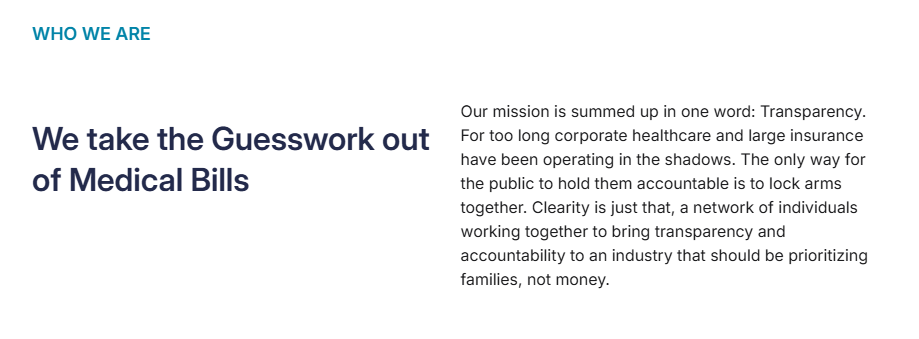
There is a massive opportunity for improvement in this experience, and that’s where Clearity Health comes in.
So, What Is Clearity Health?

Clearity Health is a company that helps people make sense of medical costs and, in some cases, challenge or negotiate a bill. It’s based in Austin, Texas, and works with patients across the country.
There is a fairly simple question underneath what the company does: What am I paying for, and why?
That is what I want from a medical bill. I want to know what they did, why they did it, and how much each part costs. If I understand those pieces, I am in a much better position to understand the number sitting at the bottom of the page.
There are two sides to Clearity. One gives you regional healthcare cost estimates so you have an idea of what care may cost. The other side reviews medical bills, helps explain the charges, and negotiates directly with the billing department on your behalf.
The cost tool provides context; the advocacy side deals with the bill that is sitting in front of you.
The Cost Search Gives You a Starting Point
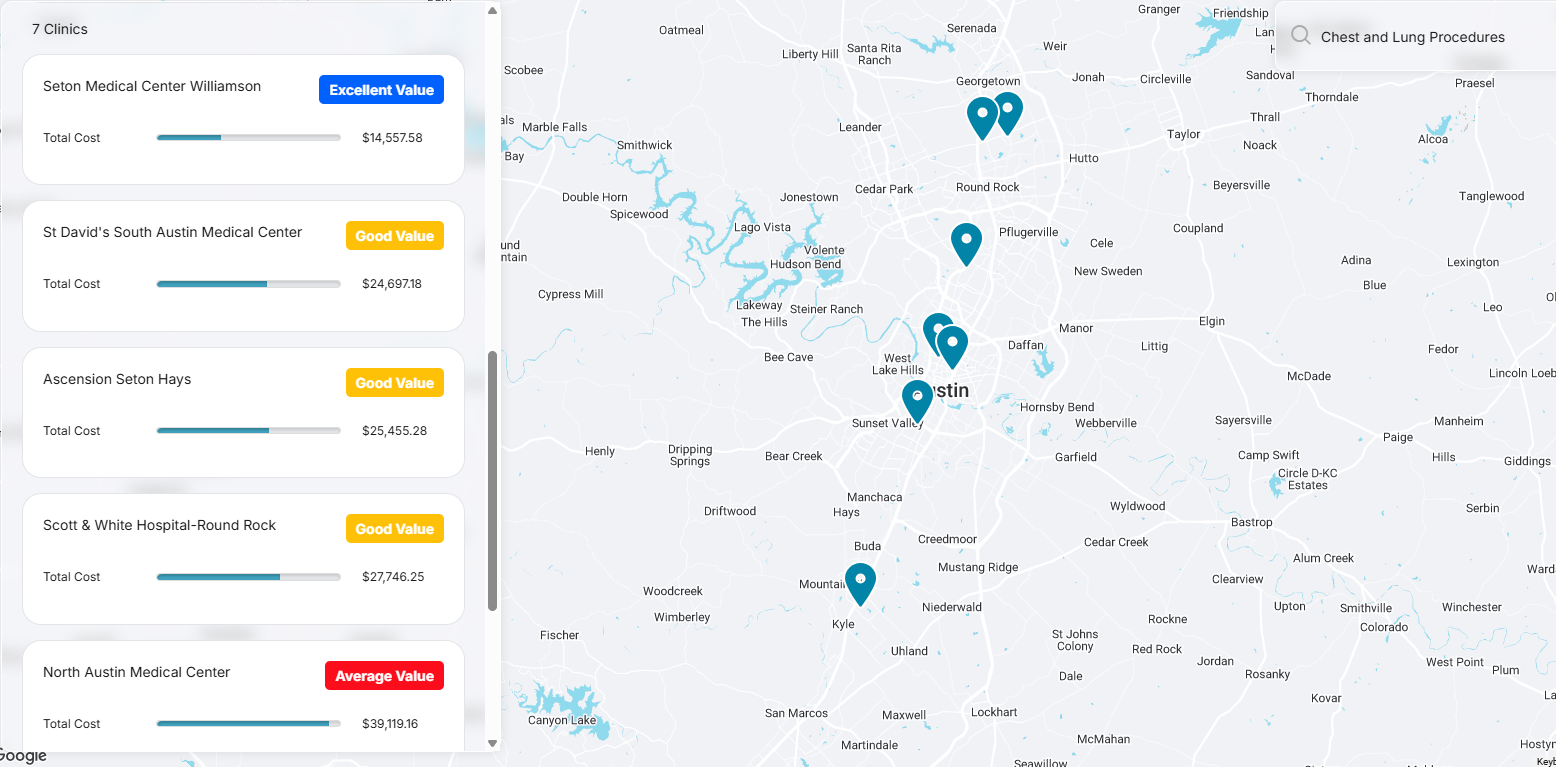
I tend to think of healthcare cost estimates in T-shirt sizes. Sometimes I do not need somebody to tell me something is going to cost $1,487.32. What I need to know first is whether I am dealing with a small expense (roughly $500), a medium expense (a few thousand dollars), or a large expense. This information can be incredibly helpful when you are budgeting for your household or trying to forecast an upcoming expense.
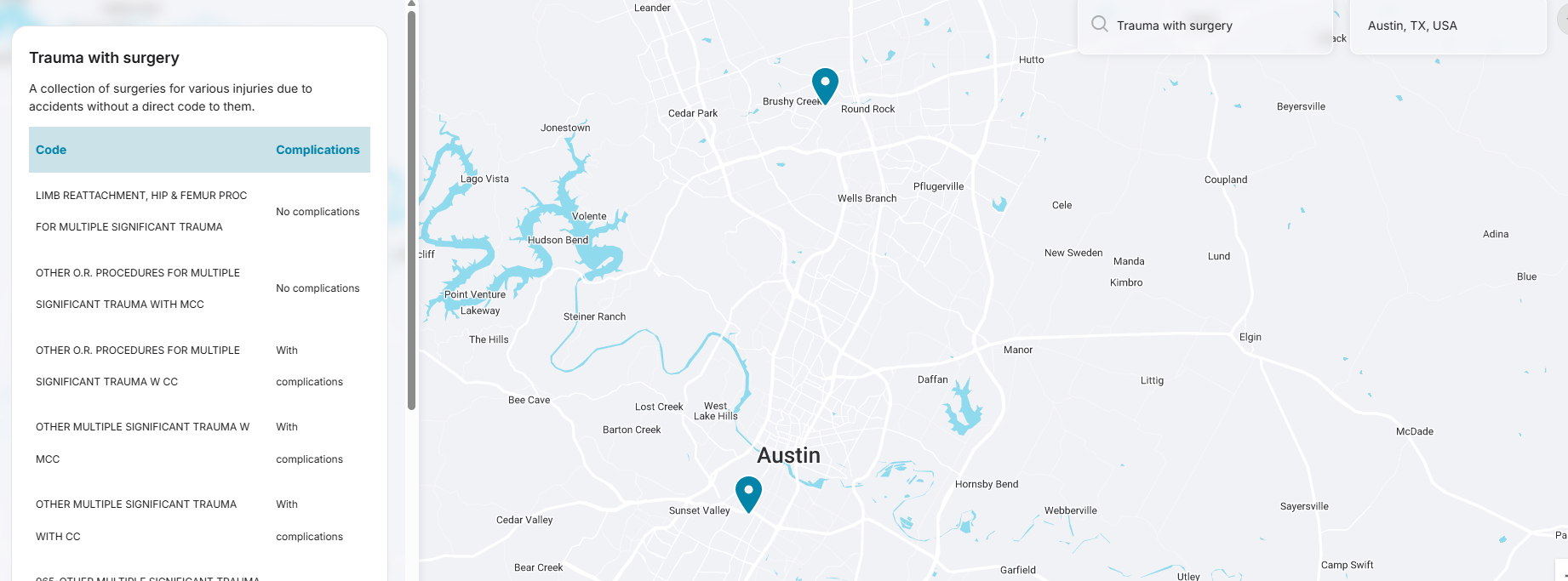
The cost search is free to use and is separate from Clearity’s bill-negotiation service, which does not charge a fee if it does not save you money. Clearity currently lets you make three searches before asking you to create a free account, so you can look around a little before signing up. You search by condition or procedure and then see available pricing information for providers in your area. Clearity says its database includes more than 700 conditions and procedures and 1.4 million providers.
Clearity’s estimates are based on federal CMS billing data and are presented as regional averages. The current data is approximately two years old, so this is not a real-time quote for what a specific provider is going to charge you. Costs can also vary based on the provider, location, insurance situation, and the specifics of your care.
That distinction is an important one. This tool is meant to help orient yourself by providing general financial information; it does not provide the exact cost of your care down to the penny.
Keep in mind that there are some limitations. Clearity says its pricing information tends to be stronger for common procedures and services in larger metropolitan areas. Smaller or rural markets and less common procedures may have fewer estimates available. That does not make the tool useless in those situations, but it changes how much weight to put on the number. The less information available, the more you should treat it as directional rather than precise.
The Bill Negotiation Service Is the More Enticing Aspect for Me
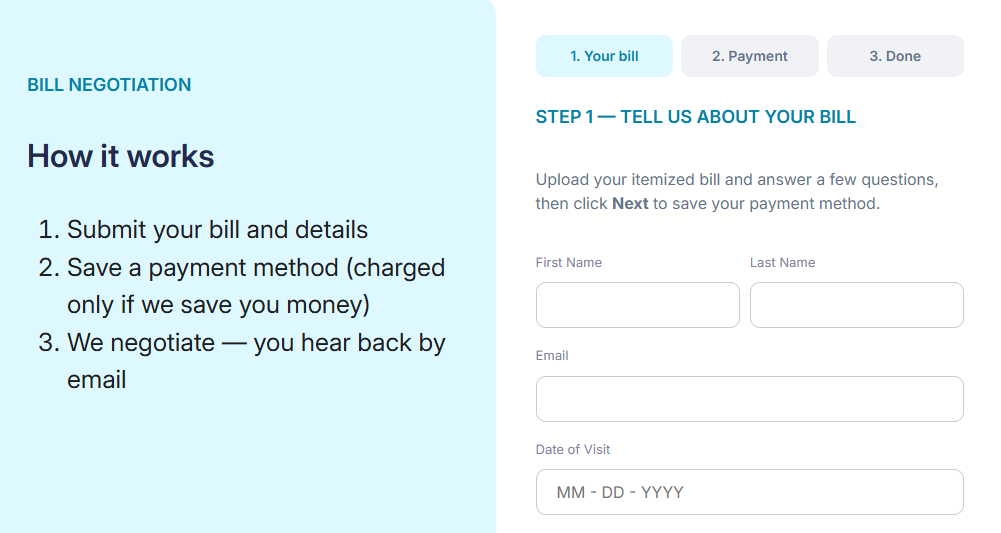
The cost tool is helpful, but the human side of Clearity is where I see more value. You send Clearity the bill along with some information about the care and your insurance. From there, someone on the team goes through the charges to see if anything looks off, including duplicate charges, billing errors, or services that may not match what you received. They also help explain what you are looking at and, if there is something worth questioning, can take that up with the billing department for you.
This feels more like two services than one. The first is translation. If you have several things involved in one episode of care, understanding exactly what happened financially can get complicated quickly. You may have different services, providers, departments, insurance adjustments, and separate bills arriving at different times, not to mention any duplicates that get sent. Before you try to negotiate anything, you probably want somebody to help you understand what you are negotiating.
The second part of this service is the handoff. Nobody likes going back and forth with a billing department. Then there may be follow-up with another department, the provider, or an insurance company. If you have ever gotten off one call only to learn that the person you just spoke with cannot resolve the issue and you need to call somebody else, you understand how quickly the time adds up.
Giving somebody a script for that conversation is one thing; having somebody take the conversation over is very different. A script might help you make the first call, but what happens when the answer does not fit neatly into the script? What happens when somebody needs more documentation or tells you to contact another department? That is the part I would rather hand to somebody who does this regularly.
How Much Does Clearity Health Cost?
Clearity uses contingency pricing, so there is no upfront fee. If Clearity saves you money, its fee is 20% of the amount saved, with the fee capped at $1,000. If there are no savings, there is no fee. Whether 20% of the amount saved is worth it is going to be an individual decision.
For simple math, imagine a hypothetical situation where a bill was reduced by $1,000. A 20% fee would be $200, leaving the patient with $800 of that reduction. That is only an illustration of how the fee works. Clearity does not guarantee that it will reduce a bill by $1,000 or by any other amount.
There is an expertise component too. If you worked in medical billing for 15 years, you may look at this service and think, “I can handle that.” Fair enough. Someone with an accounting background or a lot of experience dealing with healthcare billing may also be much more comfortable working through their bill independently.
For the general public, 20% of the amount saved can be a reasonable trade when you factor in the time, expertise, and frustration you are handing off. But I would still do some back-of-the-envelope math before signing up. Consider: What is the bill? How complicated does it look? How much time am I prepared to put into it myself? What is having somebody else manage this worth to me?
There Are Still Some Tradeoffs
I would not go into Clearity expecting a particular savings amount. Some bills may have more room for negotiation than others, and Clearity specifically does not guarantee a particular reduction. That means the question is not simply, “Can Clearity save me money?”
There is another question: How much is having somebody else handle this worth to me? That is why I do not view the 20% of the amount saved fee as automatically cheap or expensive. It depends on what you are handing over.
The cost estimator has limitations too. It can give you useful context, but it is not a quote. Its data is not real-time, and the amount of information available varies by service and market. It is important to understand that going in rather than expecting the number you found online to perfectly match the bill that eventually arrives.
Who Clearity Health Is For
If I am going in for routine care that I understand well, the bill looks normal, and I am comfortable dealing with the provider myself, Clearity is probably more service than I need.
This changes when the situation gets complicated. Maybe it is a new type of care for you or somebody in your family, or maybe multiple providers were involved. Sometimes you just cannot figure out why a particular charge is there. Perhaps you have already made a few calls and are no closer to understanding the answer. That’s where Clearity might be appealing.
It is important to note that the bill-negotiation service is for the financial side after care has been received. It is not a substitute for medical advice, and it is not something used to decide whether to seek emergency care.
My Take on Clearity Health
The reason I could see myself using Clearity is not the possibility of some huge, dramatic reduction in a medical bill. Maybe they find significant savings, or maybe there is less room to negotiate. I don’t build my decisions around outcomes nobody can promise. I could see myself using it when I have a stack of paperwork that makes me cringe when I think about going through it, or when I have been staring at a bill for so long that the numbers are starting to blur.
The cost-search tool is a nice complement. I like having a general idea of what care may cost and some outside context for a bill. But that is not the part that would get me across the line. For me, the value is the human element: having somebody translate what I am looking at, explain why I am paying it, identify what deserves another look, and then handle the back-and-forth.
There are plenty of situations where I would make the call myself and keep 100% of whatever I managed to negotiate. There are others where, after the third letter and second phone call, 20% starts looking pretty reasonable. Sometimes knowing “I do not want to deal with this anymore” is enough information to make the decision.