

Known for his no-nonsense approach and hands-on leadership, Jonathan blends real-world experience with technical precision, whether he’s streamlining accounting workflows, optimizing tax strategies, or forecasting financial performance.
Outside of the numbers, he’s a fitness enthusiast who trains in his home gym before sunrise and has a knack for marine aquariums, construction projects, and keeping things humble, with no flashy titles needed.
- Best Payment Processors That Don’t Freeze Funds: A CPA’s Guide - August 7, 2026
- Strategic Capital vs Stone Street Capital: Who Should Buy Your Structured Settlement? - February 19, 2026
- The Best Financial Comparison Sites for Travel Credit Cards - January 17, 2026
There are few worse mornings than logging into your dashboard and finding the payouts stopped. No warning email, no phone number that reaches a human, just a banner saying your account is under review.
It’s worth saying up front that “processors that don’t freeze funds” is a bit of a fiction. Every processor reserves the right to hold money, because the card networks hold them responsible if a merchant disappears mid-chargeback.
What actually differs is how the account is structured, whether anyone underwrote your business before you started processing, how the reserve terms are disclosed, and whether a named person answers when something trips.
Bottom Line Up Front
Among the alternatives here, Helcim is a sensible landing spot for low-risk businesses that want transparent pricing, PaymentCloud is the specialist for merchants already declined elsewhere, and Luqra is the one worth looking at hardest if uncapped volume, predictable funding, and reachable human support are what you’re actually buying. None of them can promise a hold will never happen.
What Actually Triggers a Hold
Holds are almost never a personal judgment about you. They’re risk signals firing inside an automated system, and the same triggers repeat: elevated dispute or chargeback rates, unverified business or identity details, sudden changes in volume or transaction patterns, and product descriptions that don’t match what the processor believes you sell.
The other big category is delivery timing: pre-orders, custom fabrication, event tickets, coaching packages, and annual subscriptions all collect money long before the customer receives value, which invites refund exposure. Add the verticals categorized as high-risk, and you’ve explained most freezes in the wild.

How to Lower Your Odds Before You Need To
Most of the prevention work happens at onboarding. Describe your business accurately and completely on the application, including the awkward parts. Merchants who soften the description to speed approval are the ones shut off in month four, when the risk team sees what you actually sell and treats the mismatch as misrepresentation.
After that it’s maintenance.
- Keep your chargeback ratio under 1%, ideally under 0.5%.
- Answer documentation requests the day they arrive.
- Warn your processor before a launch or a seasonal spike so the increase reads as expected rather than anomalous.
- Make refund terms easy to find and your billing descriptor recognizable.
- Then build in structural insurance: a second merchant account, and a cash reserve covering about a month of operating expenses.
The 5 Best Merchant Processors: Stripe, Square, Helcim, PaymentCloud, and Luqra
Stripe
The Best Fit: Software-driven businesses with stable volume, low dispute exposure, and enough cash on hand that a payout pause is survivable.
The Account Model
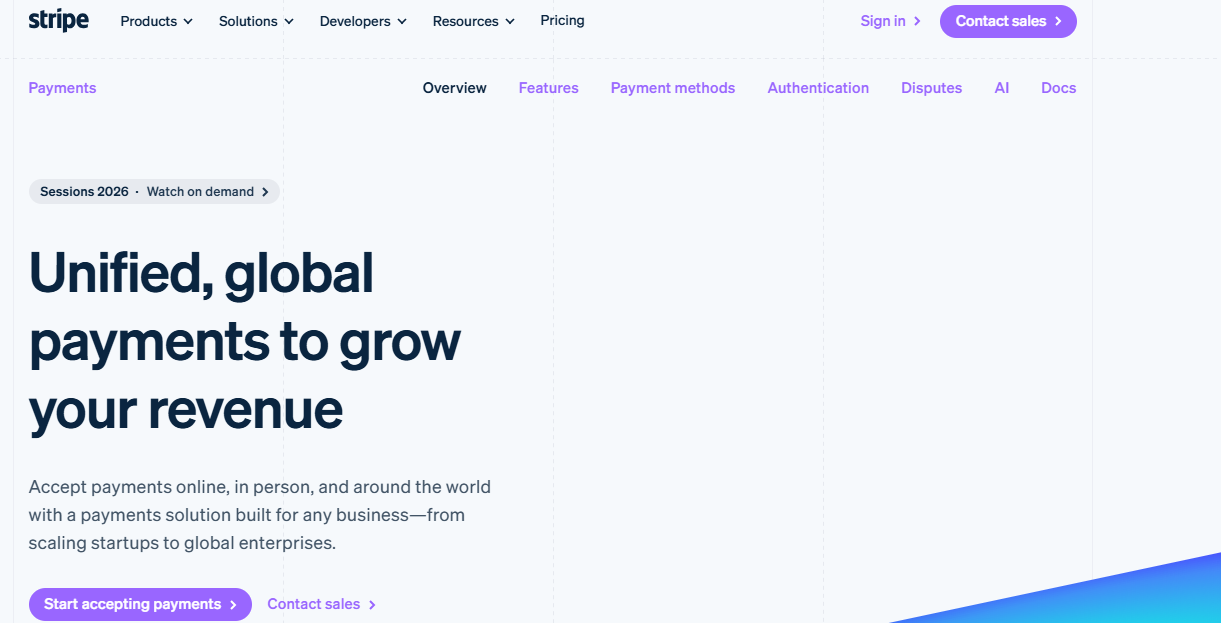
Stripe is an aggregator with instant onboarding. Underwriting is automated and continues in the background for the life of the account, which is why long-established merchants can still get reviewed out of nowhere.
How The Holds Work
Stripe can pause some or all payouts during a review, and reserves tied to elevated risk can persist for months even after payouts resume. Timelines are the sore spot: well-documented cases can clear in days and escalated ones drag.
Pricing
Flat-rate and publicly posted. It’s my personal opinion that it’s predictable, but expensive at volume relative to interchange-plus.
Where It’s Strong
- The developer tooling and integration ecosystem are genuinely best-in-class, and for a technical team the build speed is hard to match anywhere else.
- Pricing is transparent and requires no negotiation, which is the right trade for early-stage businesses with modest volume.
Where It Hurts
- Support is documentation-first and ticket-based, so there is usually no named human to call when funds are held.
- The same automation that makes signup effortless makes account review opaque, and merchants frequently can’t get a specific reason for a hold.
Square
The Best Fit: Brick-and-mortar retail, food, and service businesses with steady in-person volume and modest ticket sizes. It’s wise to have a second processor if your risk profile could be flagged.
The Account Model
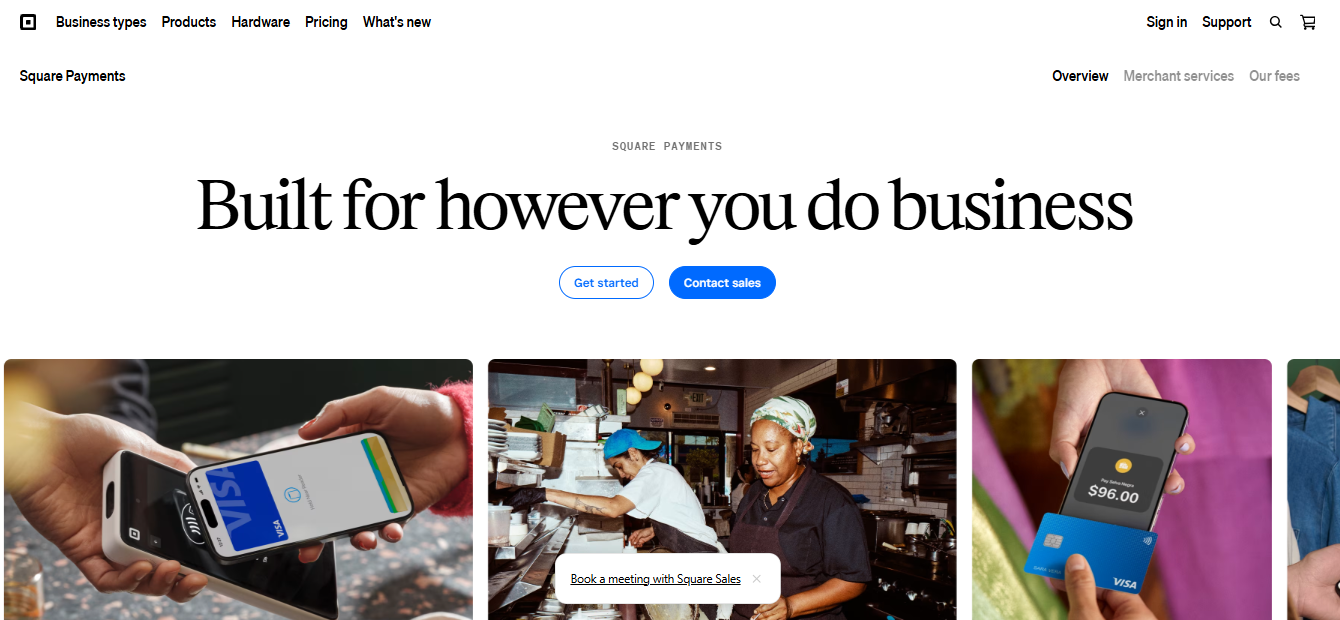
Square, like Stripe, is an aggregator. It possesses some of the most consumer-friendly onboarding in the industry. Multiple businesses sit under one master merchant account, which makes Square structurally sensitive to anything that looks risky.
How Holds Work
This is where Square draws the loudest complaints. Its user agreement permits holding a substantial share of rolling 90-day volume at Square’s discretion, and reserves the right to close accounts broadly and without advance warning. When an account is deactivated, funds are commonly held around 90 days to cover potential disputes, and sometimes longer where dispute exposure looks elevated. Chargebacks are also deducted before the remainder is released. Deactivations are rarely reversed on appeal.
Pricing
Flat-rate, with same-day funding available for a percentage fee. Hardware and software are strong for the price, which is why Square is so alluring for many small businesses.
Where It’s Strong
- The all-in-one package — POS, inventory, payroll, invoicing — is excellent value for a small retail or service business, and setup takes minutes.
- Small disputes are absorbed up to a quarterly cap under Square’s chargeback protection, which is unusual generosity at this price point.
Where It Hurts
- Deactivation can take your POS, inventory data, customer records, and payments down at the same time, so a payments problem instantly becomes an operations problem.
- There’s no published cap or committed review timeline on holds, which makes the downside genuinely hard to plan around.
Helcim
The Best Fit: Clearly low-risk businesses that want cost transparency and a dedicated MID.
The Account Model
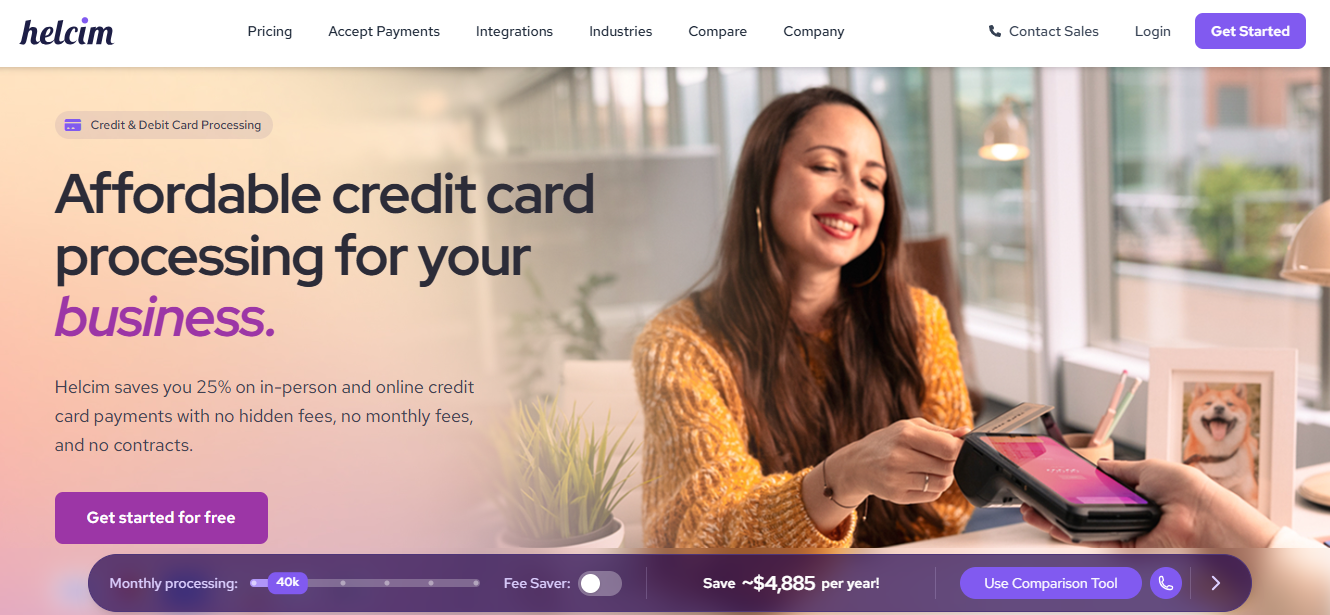
A full dedicated merchant account rather than an aggregated one. That sets this apart from the first two on the list. Applications take longer than instant signup, but you’re underwritten as an individual business, which reduces account disruption down the road.
How Holds Work
Of course, reservation authority still exists, and Helcim’s use terms permit holds on termination. Some merchants report short reviews and temporary holds during their first few batches with limited communication from the risk team, which could be a pain if you’re expecting a grand and boisterous initial opening.
Pricing
Interchange-plus, starting around interchange + 0.40% + $0.08 in person and interchange + 0.50% + $0.25 online, with markups that step down automatically as volume grows. No monthly fees, no contracts, and no cancellation or PCI compliance fees. When you get significant volume, Helcim becomes incredibly alluring.
Where It’s Strong
- Interchange-plus with published tiers lets you audit exactly what you’re paying and separate the network’s wholesale cost from the processor’s margin.
- The absence of contracts, termination fees, and monthly minimums removes most of the leverage a processor normally holds over you.
Where It Hurts
- Helcim maintains a long exclusion list and isn’t built for high-risk verticals, so a business flagged elsewhere will likely be declined here too.
- Advertised effective rates assume a favorable card mix, and heavy corporate or rewards card volume can push your real rate well above the marketing numbers.
PaymentCloud
The Best Fit: Merchants in flagged verticals, businesses recovering from a termination, and anyone who needs approval more than they need the cheapest rate.

The Account Model
These folks are a high-risk specialist that places merchants with acquiring banks through a broad backend network, including merchants already declined, frozen, or terminated elsewhere. They’re gateway-agnostic, so you can usually keep your existing cart and billing stack intact.
How Holds Work
Reserves are the explicit trade here rather than a hidden risk. A rolling reserve is applied case by case, commonly in the 5% to 10% range held for around six months on genuinely high-risk accounts, though many accounts carry none at all. Reserve terms are negotiable over time, and a documented run of clean months with a low chargeback ratio is the standard basis for requesting a reduction.
Pricing
Custom and risk-based rather than published. No application or setup fees, monthly costs commonly in the $25 to $45 range for high-risk accounts, and early termination fees are often waived.
Where It’s Strong
- Every merchant gets a dedicated account manager who handles bank matching and compliance, which is often the difference between a solvable problem and a dead account.
- The multi-bank network produces approvals for business models that instant-approval platforms simply won’t touch.
Where It Hurts
- Effective rates run higher than flat-rate platforms, because you’re paying for stability rather than price.
- Pricing isn’t public, so you have to run the comparison yourself instead of reading it off a website.
Luqra
The Best Fit: Luqra is best for scaling online merchants, particularly subscription and high-volume ecommerce, who have outgrown flat-rate pricing or already been burned by an aggregator hold.

The Account Model
Luqra is a dedicated merchant account with underwriting done up front and uncapped processing rather than volume ceilings. The positioning is aimed at scaling online businesses in ecommerce, subscription, digital goods, and high-volume markets, which are exactly the profiles aggregators tend to flag as they grow.
How Holds Work
Luqra emphasizes upfront underwriting, fast funding, and relationship-driven support. A merchant who can watch their ratio drifting toward a network threshold generally has weeks to correct it, rather than finding out when the payouts stop. Every merchant is assigned a dedicated rep with 24/7 in-house support behind them, so a risk question is a phone call instead of a ticket queue.
Pricing
Luqra advertises meet-or-beat rates, so if you’re getting very low rates with Helcim, for example, they claim they can match it.
Where It’s Strong
- Chargeback management, fraud prevention, and account takeover protection are bundled rather than upsold or handed off to a third party, which consolidates the tooling that prevents holds in the first place.
- The combination of no volume cap and a named human on the account addresses the two failure modes behind most aggregator freezes: growth that outruns an underwriting baseline, and having nobody to explain it to.
Where It Hurts
- The integration and app ecosystem is smaller than the developer-first platforms, so an engineering-heavy team may miss Stripe’s tooling depth.
- Due to Luqra doing its underwriting up front, it’s not as instantaneous as something like Stripe or Square when it comes to signing up.
The Wrap-Up
At the end of the day, you aren’t really choosing between processors that freeze funds and processors that don’t. You’re choosing between risk assessed after you’ve handed over your revenue and risk assessed before.
Stripe and Square are fine products when a payout pause is an inconvenience. Once that balance is your operating capital, a dedicated merchant account is the structural answer; Helcim for straightforward low-risk businesses, PaymentCloud when you’ve already been declined, and Luqra where uncapped volume and a person who answers the phone are the point.
Whichever you pick, read the reserve and termination clauses before you sign, and keep a second account open with a little volume running through it, just in case.