


- EverQuote alternatives - September 24, 2026
- QuoteWizard alternatives - September 23, 2026
- Navigating Auto Refinancing With A Best Site-by-Site Comparison - August 19, 2026
EverQuote and the Real Cost of a Free Quote
EverQuote, a publicly traded company, reported $195.1 million in revenue for the second quarter of 2026, with $172.1 million coming from its automotive insurance business. As a site that helps consumers source potential insurance providers, they frame their process as having three steps:
- Answer a few questions
- Compare insurance providers
- Connect for personalized quotes
Hidden behind the third step is the fact that EverQuote is not a licensed agency that runs your profile against carrier rating engines and provides you with bindable prices. Instead, it matches you to companies that want to reach you, and those companies do the quoting. Their money is not made by helping you, the customer, but by helping the insurance companies access your personal information.
Taking that a step further, EverQuote describes itself as an, “AI-powered growth solutions partner” that helps “the largest insurance carriers and thousands of agents to maximize customer acquisition across digital channels.” Their description tells us that shoppers looking to buy auto insurance are not their customers. Instead, their customers are the insurance carriers and agents. Shoppers can get value from working with EverQuote. Still, they should recognize that the information they provide about themselves and their vehicles is raw material in a process built to serve insurance companies and agents.
EverQuote and Competitors
Three types of online sites promise to connect consumers with insurance providers.
Lead Marketplaces
EverQuote, QuoteWizard (owned by LendingTree), and SmartFinancial gather auto, home, and life insurance leads by inviting you to complete forms with information about yourself and your insurance needs. The sites sell your information to multiple insurance providers, not just the insurance you sought a quote for, but possibly other insurance providers as well. For example, you are looking for car insurance, but the marketplace also sells your information to home and life insurance providers. As we’ll discuss, when lead marketplaces sell shared leads, you are likely to receive numerous calls, texts, and other contacts from those providers.
Licensed Comparison Agencies
Licensed comparison agencies such as Insurify, Compare.com (owned by Insurify), The Zebra, and Jerry provide quotes differently than marketplaces. These companies send your information to many potential insurers. The companies review your information and may gather additional information about you to provide a legitimate insurance quote. The site then presents quotes from multiple insurers and may add links to other insurers that fit your profile. You can click a quote to finalize everything and get a policy. Licensed comparison sites only make money when you buy an insurance policy after clicking on a presented quote.
A shortcoming of using a license comparison agency is that they generally do not quote insurers who sell through their own agents, such as State Farm. They usually do not have access to regionally based companies which may be the best option for you depending on your needs and profile.
Affiliate Directories
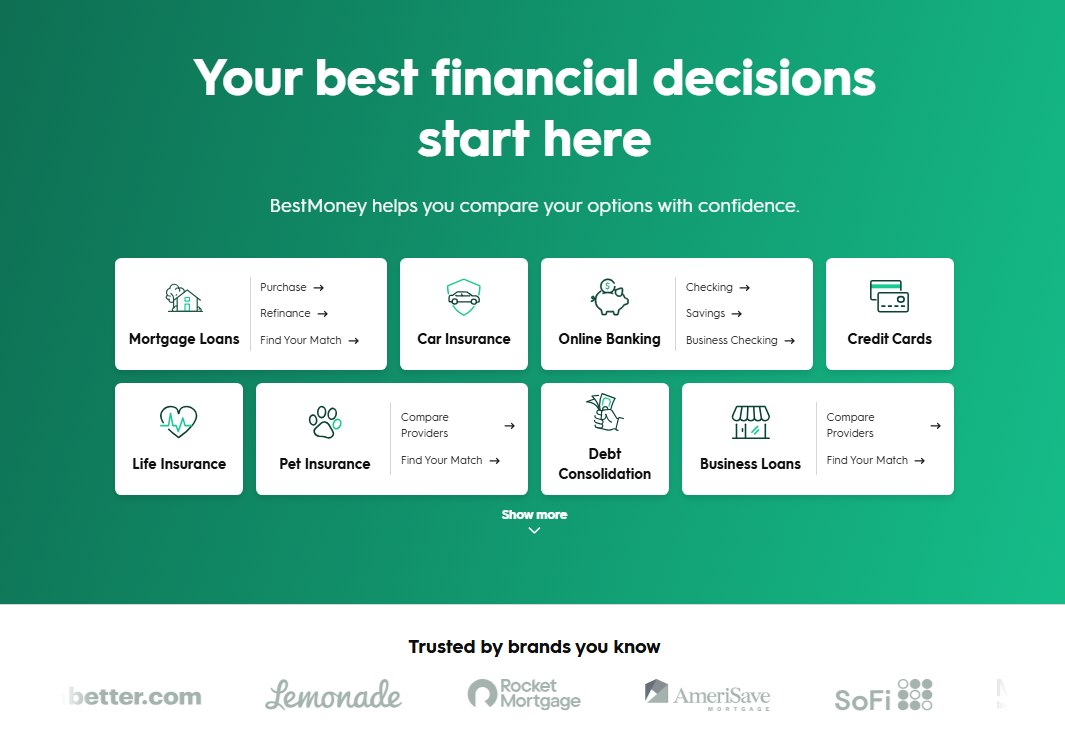
BestMoney, operated by Natural Intelligence, sits in a third category. Its car insurance page offers a quiz that takes “less than 2 minutes”. It returns recommended insurers from a roster that includes top firms such as Progressive, Geico, Allstate, Liberty Mutual, and The General. BestMoney‘s advantage is that it collects limited data and selects an insurer that matches your profile. This limits the swarm of agent calls that come from lead marketplaces quote generation.
BestMoney’s and other affiliate directory’s limitation is that rankings often reflect advertising relationships as well as the insurers’ merit. After matching you with an insurer, you still need to complete the insurer’s form and process to get a quote. The same company also runs the J.D. Power Auto Insurance Marketplace launched in March 2026. J.D. Power and Natural Intelligence partnered to create the Auto Insurance Marketplace.
Selling Your Information: Shared versus Exclusive Leads

From a consumer experience standpoint, you can have dramatically different experiences with lead marketplaces versus licensed comparison agencies and affiliate directories. One aspect affecting your experience is how the leads are sold. The difference is largely on whether the site sells shared or exclusive leads.
An exclusive lead goes to one insurer at a time. A shared lead goes to multiple insurers. Insurers pay more for exclusive leads because they’re likely the only insurer to contact you, which allows them to work at your pace. They are also more likely to gain your business if they have what you seek. If they don’t then your information may be sold as an exclusive lead to another insurer as “aged”, but still worth something to an insurance company.
When EverQuote or another lead marketplace sells a shared lead, insurers are incentivized to be the first to contact you and provide a quote. That results in a rash of contact attempts, with consumers feeling deluged by the number of calls. Their strategy is to call you within seconds, call again, and follow up with a text. Rinse and repeat. These strategies are also why EverQuote’s Trustpilot score sits near the bottom of the scale, with complaints centered on call and text volume.
The Do Not Call List Will Not Save You

Some consumers think they will be saved from this misery because they registered on the Do Not Call list at some point in the past. Unfortunately, that doesn’t help because submitting the form to request insurance quotes exempts a company from the registry for 90 days. If you purchase from them, they are exempt from Do Not Call restrictions for 18 months. By accepting the quote, usually a check box, you are allowing the company to contact you, and in the case of a lead marketplace, to allow other companies to contact you.
Often, these firms don’t disclose whether they will sell your record as a shared or exclusive lead, and if shared, how many buyers will have access. So, when working with a lead marketplace, assume your lead will be shared, and use a “throwaway” email address and a secondary phone number throughout the process.
Choosing Wisely

Lead marketplaces like EverQuote are legitimate businesses that perform a service that some consumers value. The question is whether their business model matches what you want. If you are shopping for auto insurance and want to hear from multiple insurers, EverQuote can likely deliver, and its promise to share your information with no more than three insurers is tighter than many other lead marketplaces.
However, if you want real insurance quotes without being pursued by multiple agencies, a licensed comparison agency is the better first stop. You may miss out on some insurance companies with this method however.
If you want to browse without handing over your phone number, an affiliate directory like BestMoney works well. Go in with the understanding the rank may be slightly skewed due to advertising fees paid.
Of course, you can also contact several insurers or agents directly to obtain quotes. Though the process takes time, you avoid being hounded by providers. You can also find regional or local insurance companies which may be missed by comparison websites.
Whichever path you choose, you are best off getting several quotes and reviewing the final written quotes (with identical coverage limits and deductibles) to compare pricing and understand how the companies treat potential customers. Companies that treat you with respect when you are a prospective customer tend to treat you well once you buy a policy from them.