


- Why Do Judges Reject Structured Settlement Sales? - September 21, 2026
- Best Finder.com Alternatives for Comparing Financial Products - September 4, 2026
- Strategic Capital vs. JG Wentworth vs. Peachtree: Which Structured Settlement Company Is Right for You? - July 31, 2026
If you’ve checked out Finder.com to compare things like credit cards, personal loans, bank accounts, insurance, or mortgages, you probably already understand how helpful it can be in some situations to have your options laid out in front of you before committing to anything. Finder.com is one of the bigger names for financial comparisons, but it’s not the only one.
Below, we’ll go through a handful of alternatives, what each platform compares, how their tools work, and who each one tends to suit best.
Different Types of Comparison Tools
The platforms in this guide use three main approaches, sometimes mixing them together. Knowing how each one works will help you choose the best fit for what you’re looking for.
Editorial Roundups
Editorial roundups are “best of” lists. A good example is the top credit cards for travel, or the best high-yield savings accounts. These roundups are put together and ranked by each site’s editorial team, which can be a useful starting point for research. But their rankings reflect the criteria they weighted, like a card’s rewards rate or which lenders pay for placement, not necessarily the criteria that matters for your situation, like your credit score or how fast you need funding.
Filterable Comparison Tables

Filterable comparison tables offer more control. These tools display products and details in a simple grid, often including rates, fees, features, and other important criteria, that you can filter and sort to fit your needs. If you know exactly what you’re after and want direct comparisons, this approach gives you more control over what you compare.
Personalized Marketplaces and Quote Tools
Personalized marketplaces and quote tools go one step further by asking about your own situation, like your target loan amount, credit score, ZIP code, or type of coverage you need, and then pulling offers matched specifically to you.
This is the most “realistic” version of a shopping experience you’ll find at this stage. Just keep in mind that you’ll probably have to share some personal info, and your options usually depend on which providers partner with that site.
How to Judge a Financial Comparison Site

Before getting into the specific platforms, it’s helpful to know what to look for and how to make a decision. Here are the questions you may want to consider:
What Types of Products Are Covered?
Some sites try to cover nearly every type of financial product, like everything from credit cards to student loans to home insurance to life insurance, while others specialize in just one or two categories. If you want convenience, a site with broad coverage makes sense, but if you’re looking for something very specific, you may want to look for something that caters more to that.
Whose Products Are Shown?
No site can show every single product available on the market. Most work with a selection of partner companies, so the result you’re seeing is just a small piece of all the products out there. There’s nothing wrong with that; just keep in mind that what you’re seeing is very curated.
How Transparent Is the Platform?
Reputable sites tend to be more up front about how they operate. Look for clear disclosures about how they make money, straightforward explanations of their editorial methodology or ranking process, and honesty about ads and sponsored content. On some sites, you can find this info easily; on others, you really have to search for it.
How Much Information Do You Have to Provide?
Some comparison sites let you look through rates and product details without asking for anything personal, while others want specific information, like your contact details or financial situation, before showing you options. Look at what the site is asking for, why they need it, and whether submitting that information counts as giving them, or their partner companies, consent to contact you.
If you’re just browsing and getting a feel for what’s out there, you might want a site that lets you compare options without having to share much (or any) personal info. Once you’re ready to get actual quotes or offers that are a real match for you, it makes sense to provide more so your results are as accurate as possible.
How Current Is the Information?
Rates and offers change all the time, so it only makes sense to use a site that keeps things up to date. Check for a recent “last updated” date, and be skeptical of any numbers, like rates or fees, since those change often and pages don’t always catch up.
Once you know what to look for, it becomes much easier to pick a platform that helps you make the right decision.
How Do Financial Comparison Websites Make Money?
Most financial comparison websites are free to use, but they have to make money somehow. The main way these sites make money is through what’s called the affiliate or referral model. When you click a link, request a quote, apply for a credit card, open an account, or buy insurance through one of the site’s partners, the site may receive a commission or fee. This kind of compensation varies by platform, and sometimes even across different offers on the same site.
Compensation can influence what you see and where: companies willing to pay may appear higher in the results or get a “spotlight,” though most websites should note this somewhere, but often in very small print.
How they rank or review a product can be separate from these commercial arrangements, but not always. It’s smart to check each platform’s disclosures so you understand if and how money factors into the placement and ranking.
5 Finder.com Alternatives for Comparing Credit Cards, Loans, and More
These are a handful of sites that do something similar to Finder.com. Let’s break down what each one focuses on and how they compare.
1. BestMoney

BestMoney is a free financial comparison site covering a wide range of categories, including banking, insurance, credit cards, debt relief, mortgages, loans, investments, and business finance. If you’re juggling several financial decisions at once and want one platform that covers all of them, BestMoney is a great pick.
The site is designed to make comparing products side by side simple, not just a wall of data. BestMoney breaks things down with plain explanations, tips, and research to back it up.
It’s free to use, but like most sites in this space, BestMoney is supported by advertising and paid by its partners (the banks, lenders, and other financial companies listed on the site). That compensation can influence which products show up and how they’re ranked. Even so, the site says it values transparency, holds itself to editorial standards, and follows a research process that’s meant to keep its rankings fair.
- Best for: Anyone who’s comparing lots of different financial products at the same time, wants broad coverage (so you can really see what’s out there), and prefers having comparisons simplified without feeling overwhelmed by too much data.
- Worth knowing: Since BestMoney runs on offers from partners, it won’t show absolutely everything that’s out there in the market.
2. NerdWallet
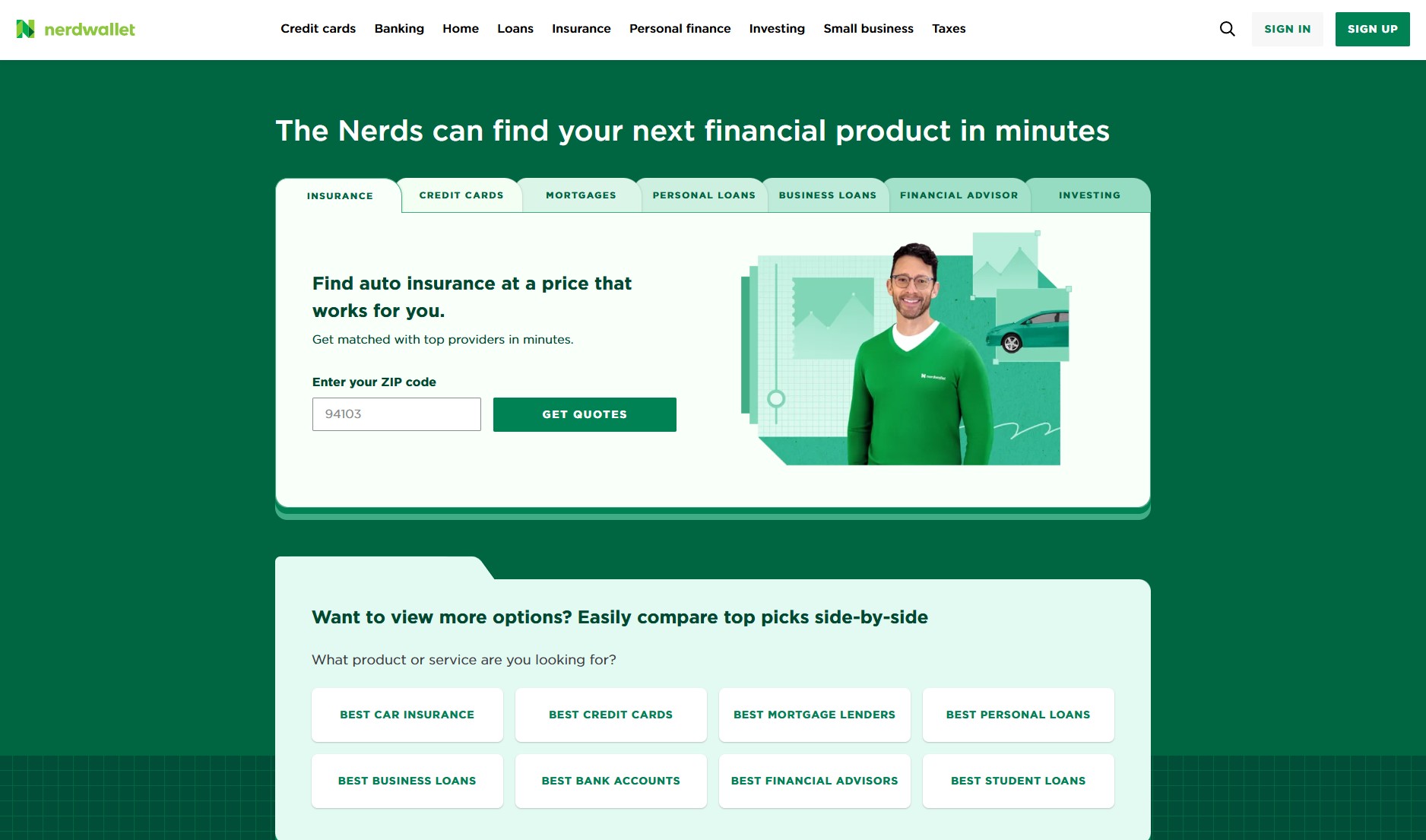
If you’ve looked into credit cards or financial advice, you’ve probably come across NerdWallet. It’s one of the biggest names in the space, pairing editorial content with comparison tools across categories like credit cards, bank accounts, loans, mortgages, insurance, investing, and travel rewards.
You’ll find detailed reviews, “best of” lists, educational guides, and calculators, plus tools that let you compare products side by side. NerdWallet also offers more personalized features for users who create an account, such as credit score tracking and tools for monitoring cash flow.
- Best for: People who want more in-depth explanations and prefer to do a lot of research before making big decisions, whether you’re picking your very first travel rewards card, shopping around for mortgages, or just trying to learn more about finances.
- Worth knowing: NerdWallet also makes money whenever people check out or apply for products that appear on the site, and that’s always disclosed. Also, their “best” picks and rankings are shaped by the platform’s own rating factors and editorial priorities, which might not always be identical to what you personally value.
3. Bankrate

Bankrate is one of the longest-running names around, going back decades as a trusted source for rate information. The platform covers a broad scope, including mortgages, refinancing, home equity, savings and CD accounts, credit cards, loans, and insurance, but its reputation is probably strongest when it comes to anything rate-related.
You’ll find a good mix of editorial guides and regularly updated rate tables, along with all kinds of calculators, from mortgage calculators and amortization tools to savings projections. If you’re trying to compare rates for things like mortgages or CDs, Bankrate makes it incredibly easy to see how the market looks right now.
- Best for: Serious rate shoppers. This platform can be particularly useful if you’re trying to compare mortgage interest rates, looking for strong CD or high-yield savings options, or keeping an eye on changes in any kind of financial rate.
- Worth knowing: Some of the displayed rates come from Bankrate’s advertiser partners, and what you ultimately qualify for will always depend on your own credit, income, and other specifics. You should consider those rates as starting points rather than concrete guarantees.
4. LendingTree
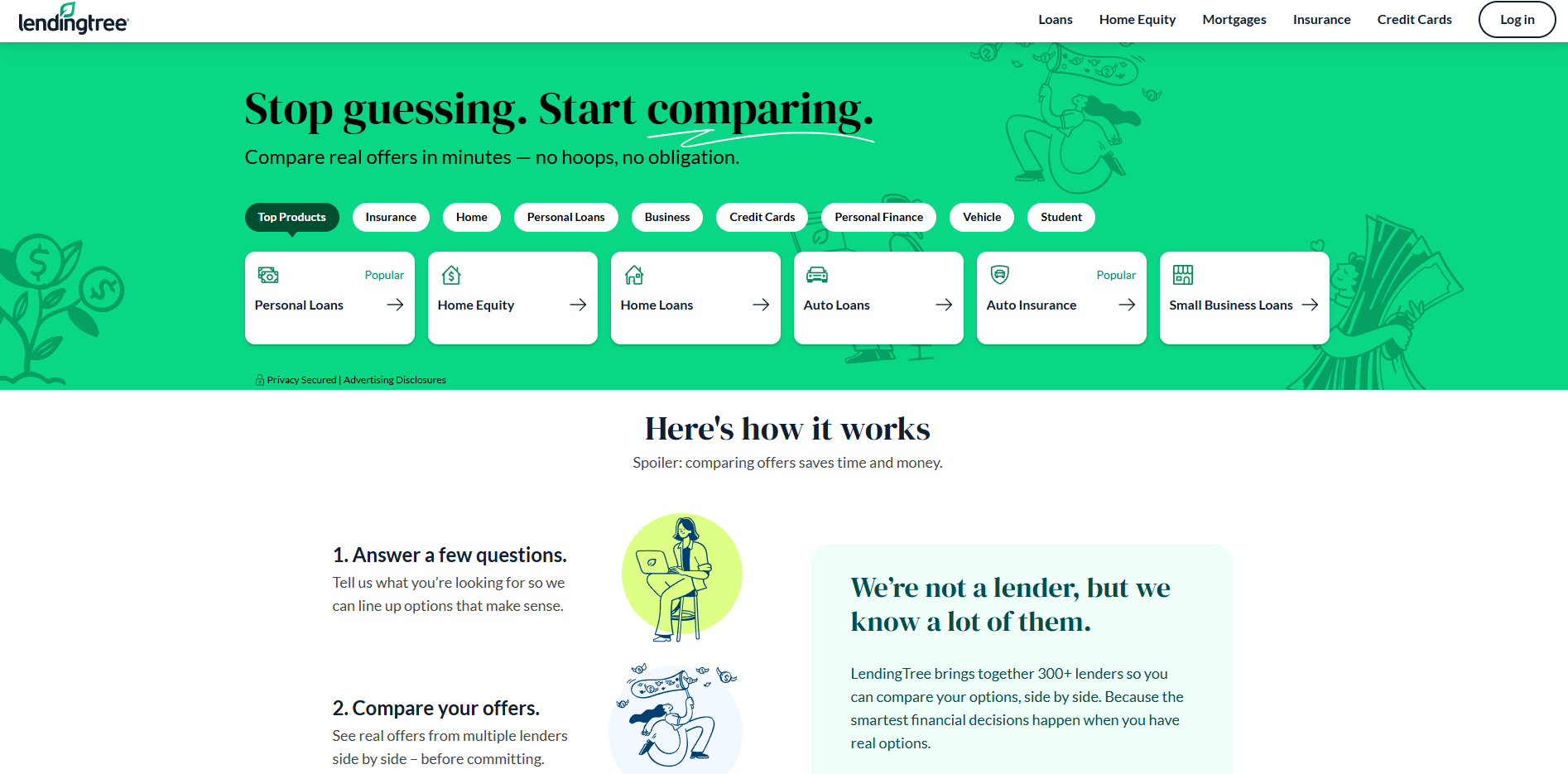
LendingTree takes a different approach than most. It’s designed as an actual lending marketplace. Instead of just serving lists or published rates, they ask for details about you and your loan needs, whether you’re shopping for a mortgage, a personal or auto loan, business financing, or thinking about consolidating debt. With that info, LendingTree connects you with lenders in its network who may then try to win your business.
What’s nice is that you see real offers based on your specific situation, not just broad, advertised rates you might never actually get. You will need to provide personal and financial details upfront, and matched lenders will often follow up with you directly.
- Best for: People who are ready to go from researching to borrowing. If you’re set on taking out a new loan and want to try to get the best deal, this process goes well beyond what most editorial or comparison sites offer.
- Worth knowing: You can expect quite a bit of contact from lenders, like calls and emails, because by submitting their form, you’re giving your consent to be reached out to. Also, keep in mind the products and rates you get access to come only from LendingTree’s network, not every lender out there.
5. The Zebra

The Zebra is the specialist on this list. Instead of trying to cover every kind of financial product, it focuses entirely on insurance comparison, with car insurance as its main strength. You can also compare insurance quotes for home, renters, and a few other policy types, but auto is where The Zebra started and still gets the most attention.
You basically enter your information, like your car details, your driving history, what kind of coverage you want, and your ZIP code, and The Zebra instantly pulls up real, side-by-side quotes from different insurance companies.
Unlike lots of financial sites that rank or review as third parties, The Zebra is actually licensed as an insurance agency and is clear about its role as a marketplace, not just giving advice or examples. You’ll also find that The Zebra keeps the process pretty simple. They guide you step by step through the quote requests so you don’t miss any important details.
- Best for: Anyone shopping for insurance, especially auto. If you want to get multiple personalized side-by-side quotes in just a few minutes, The Zebra takes out a lot of the legwork.
- Worth knowing: As is pretty much standard for these sites, the quotes provided are only from insurance companies that participate with The Zebra, so there could still be better options out there that you aren’t seeing. While their quotes are real and based on your information, the final offer always comes after review by the actual insurer you choose.
A Quick Note: Make Sure You’re on the Right Country
Some big financial comparison sites (like Finder) have different versions for different countries. It’s easy to end up looking at stuff meant for the U.K., Australia, or Canada instead of the U.S. It’s important not to make this mistake because each country has its own rules, financial products, and rates, so the info isn’t always interchangeable. Before you make any decisions or click “apply,” double-check that you’re on the U.S. site.
How to Choose the Right Finder.com Alternative
Still not sure where to start? Use the table below to match your situation to the right pick.
| What you’re looking for | Try |
|---|---|
| Broad coverage across most financial categories | BestMoney |
| Shopping across multiple categories (cards, loans, etc.) | BestMoney |
| Independent research with filters and detailed guides | BestMoney or NerdWallet |
| Comparing insurance, particularly auto insurance | The Zebra |
| Comparing current mortgage or CD rates | Bankrate |
| Ready to apply for a specific loan | LendingTree |
| Seeking quick, personalized quotes based on situation | LendingTree or The Zebra |
| Educational content and in-depth learning | NerdWallet |
| Checking the latest financial rates quickly | Bankrate |
Bottom Line
Finder.com is just one resource, not your only option. Which alternative works best comes down to what you’re shopping for, and whether you’d rather have editorial picks, comparison tables, tailored quotes, or a specialist platform.
Don’t rely on just one source. Shop around, compare the details, read the fine print, and double-check the final offer directly with the provider.