


- How to Compare Money Transfer Services - October 14, 2026
- The Best Sites Like NerdWallet for Comparing Financial Products - September 18, 2026
- The Best Business Loan Comparison Sites - August 29, 2026
While cards with annual fees tend to have higher rewards, they may not be the best choice depending on your spending habits. If you’re not spending enough to where the rewards offset the fee, it’s probably worth it to get one without the yearly cost.
But even if the annual fee isn’t a factor anymore, there are still plenty of other variables you need to consider as you pick a credit card. So instead of visiting each individual card company’s site and manually filtering through all the information, it’s best to use a comparison site to help hone in on your top picks. Here are some of the best ones to use when looking for a card with no annual fee.
At a Glance
- BestMoney: Best for usability and quick research
- WalletHub: Best for extensive card coverage
- The Points Guy: Best for travel cards and rewards
- NerdWallet: Best for credit card education
- Credit Karma: Best for data-driven credit card insights
BestMoney: Best for Usability and Quick Research
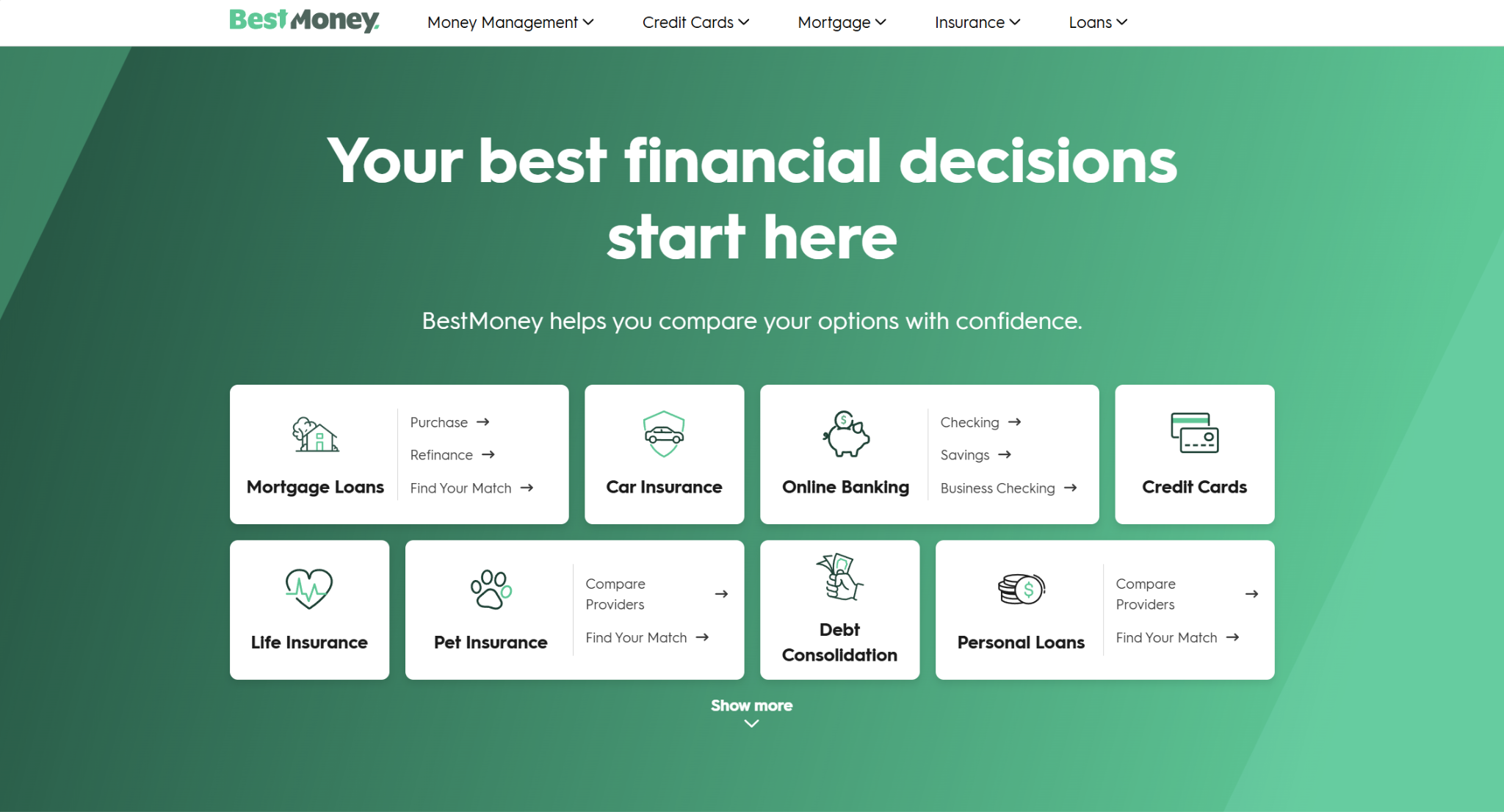
BestMoney is a user-friendly comparison site that prioritizes clear categories and easy navigation. In addition to using it for credit card research, you can also take advantage of it to compare insurance policies, loans, and other financial products.
No-Annual-Fee Card Coverage and Filters
Within the credit card category, there is a range of options to choose from. There’s an “Our Best” category, where the BestMoney team lists their top picks, but there are also categories for cash back, balance transfer, travel, rewards, no annual fee, and 0% APR credit cards.
Under no-annual-fee cards specifically, BestMoney currently shows nine options. This is a relatively short list, but this means it’s not overwhelming you with choices, so it could be a less-intimidating choice when you’re only just beginning the search for a new card.
For each card, BestMoney shows you the rewards rate, welcome bonus, and recommended credit score.
Ratings and Reviews
BestMoney’s team assigns each card a score out of five stars and publishes an editorial review that discusses card characteristics like fees, APRs, rewards, security, customer service, and the application process.
Educational Resources
BestMoney publishes thorough articles on a variety of credit card topics, such as how many credit cards to have, how to handle credit card debt, and how to negotiate a lower APR. The site also offers a balance transfer savings calculator that will show you potential savings given your existing credit card debt and the details of your balance transfer card.
Pros
- Great for quick research
- Detailed editorial reviews
- Plenty of educational resources
Cons
- Limited number of cards to choose from
- No side-by-side comparison
- No credit card matching quiz
WalletHub: Best for Extensive Card Coverage
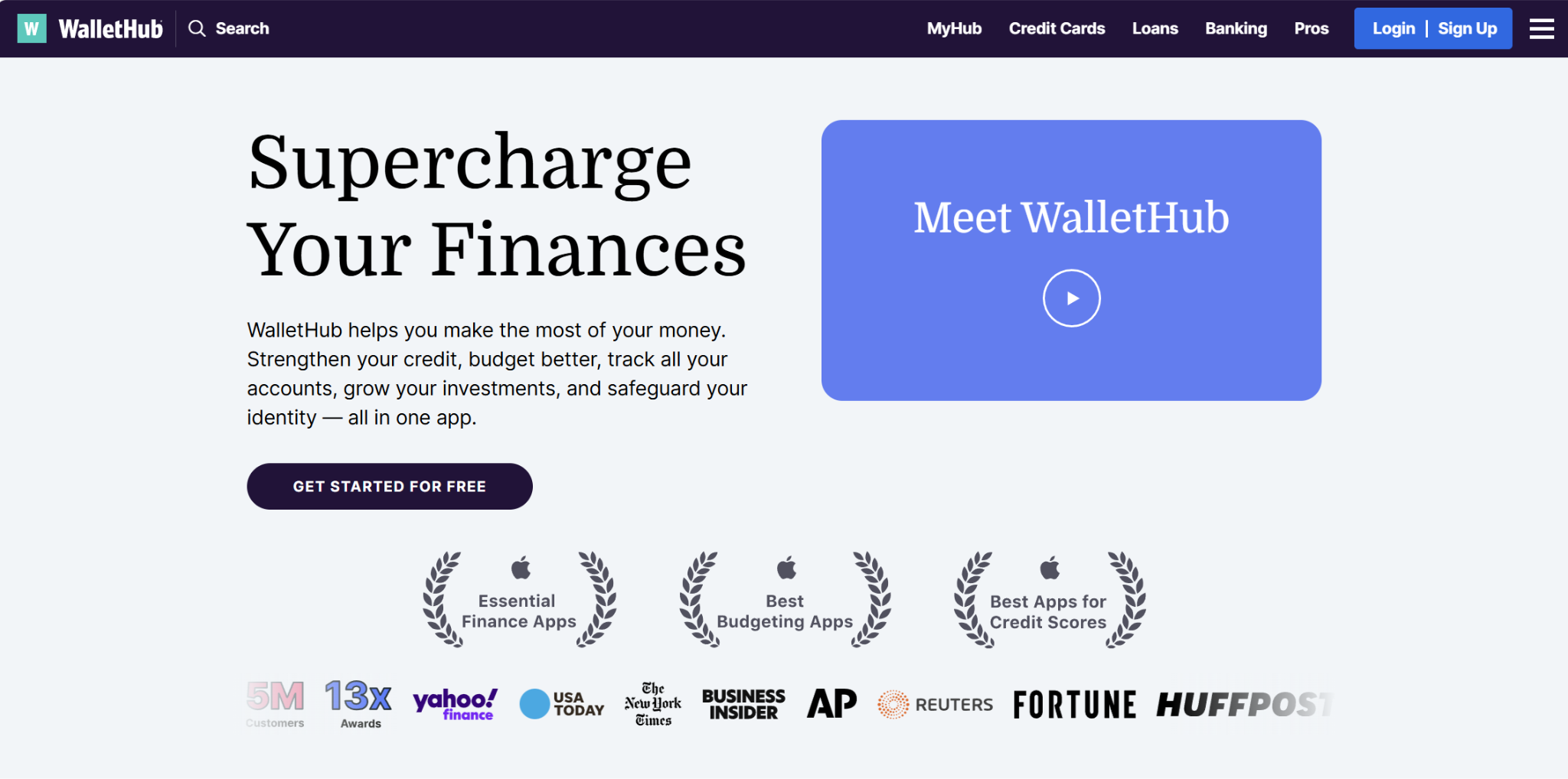
WalletHub is a popular resource for researching several types of financial products, including loans and banking. Its main niche, however, is credit cards. You can sign up for a free or paid plan to access personalized credit, budget, identity protection, and investment features, but this isn’t required to use the site.
No-Annual-Fee Card Coverage
WalletHub’s credit card database is extensive, containing over 1,500 cards. Although this can feel intimidating, there are plenty of filters to help shorten the list, such as your credit score, the card network, and secured vs. unsecured cards. Notably, you can select No Annual Fee, and you can narrow down your options even further from there.
WalletHub also lets you compare up to seven cards at a time, side by side. There’s also a credit card matching quiz called CardAdvisor, where you enter information about your credit score and the reason you’re looking for a new card, and it’ll provide a recommendation for you.
Ratings and Reviews
Many comparison sites rely solely on editorial reviews, but WalletHub publishes both editorial and user ratings and reviews, both of which are out of a total of five stars. These reviews cover basic characteristics like APRs and rewards, and the team arrives at its editorial ratings through a highly data-driven process, using card-specific metrics.
Educational Resources
Just like how WalletHub has a wide range of credit card options, it also has many educational articles. However, its article library can be somewhat tedious to navigate, as you’ll have to wade through unrelated topics (like car insurance and identity protection) to find information on credit cards.
There are several credit card-related calculators you can play around with, which can be quite helpful.
Pros
- Users can publish reviews
- Side-by-side comparison
- Card matching tool
Cons
- Potentially overwhelming number of cards
- Some cards have no or very few user reviews
- Article library is somewhat difficult to navigate
The Points Guy: Best for Travel Cards and Rewards

As you can tell from the name, The Points Guy is all about credit card points and rewards in general. While the site has a heavy focus on travel, discussing travel cards, hotels, and airlines, you can use it to research credit cards as well.
No-Annual-Fee Card Coverage
When you select the No Annual Fee category, The Points Guy will show you its top 15 picks. For each card, you can view the rewards rate, intro offer, annual fee, regular APR range, and recommended credit score.
Each card is assigned a best-for moniker, like “best for flexible cash rewards” or “best for beginner cash back,” which can help in the decision-making process. You can also compare a maximum of three cards side-by-side, which could be useful once you’re narrowing down your top options.
Finally, if you want even more help picking a card, you can take The Points Guy’s CardMatch quiz.
Ratings and Reviews
The Points Guy scores each credit card out of five stars, but it also publishes comprehensive editorial reviews that include information about welcome offers, rewards, a list of similar cards, and a verdict on whether the card is worth it.
Educational Resources
While The Points Guy frequently publishes travel-related news stories, it has a few informative resources on credit cards as a whole, such as a beginner’s guide, a guide to credit scores, and a discussion of the credit utilization ratio.
Beyond articles, it has a couple of rewards-specific resources — namely, an awards vs. cash calculator and a points valuation guide. The awards vs. cash calculator helps you see the value of your points or miles in cash, and the points valuation guide presents the value of points in cents.
Pros
- Detailed rewards information
- Side-by-side comparison
- Card matching quiz
Cons
- Heavy focus on travel
- No user reviews
- Not many credit card-related articles
NerdWallet: Best for Credit Card Education

NerdWallet is one of the most well-known comparison sites out there, and it covers just about every aspect of personal finance, from banking to insurance to taxes. If you’re looking at no-annual-fee cards in particular, the site lets you filter for this.
No-Annual-Fee Card Coverage
NerdWallet’s list of no-annual-fee cards is fairly slim — currently, 12 in total. However, this list is curated by the NerdWallet editorial team, so they’ve filtered through some potentially subpar choices.
Even though the list of no-annual-fee cards isn’t very long, you can narrow it down further by using filters for your credit range and the card issuer. NerdWallet also lets you compare up to three cards at once, side-by-side, showing important information like the rewards rate, intro offer, recommended credit score, balance transfer intro APR, and regular APR.
If you want a more tailored recommendation, you can take their CardFinder quiz, which will match you with cards that fit your criteria.
Ratings and Reviews
NerdWallet gives each credit card a rating out of five stars, encompassing factors such as the card type, rates, fees, and rewards. Beyond the score, NerdWallet’s team writes up in-depth reviews of the card, discussing pros, cons, and how to decide whether a particular card is right for you.
Educational Resources
NerdWallet is perhaps best known for its extensive library of educational articles and guides, the most relevant here being the basics of credit cards, how to apply for a credit card, how to choose a credit card, and how to manage credit card debt. However, there are also articles that get into more niche topics, such as whether you can buy gift cards with a credit card and how to dispute fraudulent charges.
NerdWallet also has two calculators specific to credit cards: one for balance transfer savings and another for credit card interest.
Pros
- Thorough educational resources
- Side-by-side comparison
- Credit card matching tool
Cons
- Limited number of cards to choose from
- No user reviews
- In-depth content could be potentially overwhelming
Credit Karma: Best for Data-Driven Credit Card Insights

Credit Karma is a useful resource for all things credit and personal finance. If you’d like, you can create an account and download the Credit Karma app to help with tracking your individual financial situation, but this is optional. Without an account, you can still visit the site to compare a range of credit cards, including those with no annual fee.
No-Annual-Fee Card Coverage
When you filter through the different credit card categories, one of the options is to view cards with no annual fee, which Credit Karma filters down to just 10 cards. While this is a fairly slim selection overall, Credit Karma’s editorial team selected these as being among the best of the best.
Because of how short the list is, there aren’t any other filters available to further narrow down your options. However, for each card, you can see the intro purchase APR and regular purchase APR, along with a list of other highlights and additional rates and fees. Also, each card is labeled with a helpful qualifier, such as “great for simple cash back” or “great for managing debt over time,” which can help you hone in on potential use cases.
Ratings and Reviews
Credit Karma relies mainly on user reviews — when you look through the list of cards, you won’t see any editorial ratings or reviews right away. Instead, you’ll see a card’s overall user rating out of five stars. If you want to read editorial reviews and the user reviews behind the rating, you’ll have to go to the Credit Card Insights section, which is separate from the main comparison list.
Educational Resources
Credit Karma’s article library is extensive, covering many common questions you might have about credit cards. There are also in-depth resources pertaining to credit scores, credit history, and building credit.
There are also three calculators in the credit card section: one for credit card balance transfer, one for debt repayment, and one for sales tax.
Beyond reviews, the Credit Card Insights section presents the average credit limit and credit score of members who matched with a particular card.
Pros
- Includes user reviews
- Extensive article library
- Data-driven credit card insights
Cons
- Difficult to locate editorial and user reviews
- No side-by-side comparison
- No credit card matching tool
What’s the Best Site for Comparing No-Annual-Fee Cards?

When you’re on the hunt for a credit card with no annual fee, it’s important to compare several options to find the optimal fit for your needs. The most efficient way to do this is by visiting a credit card comparison site. While there’s no single best site, since they all have somewhat different scopes, some comparison sites have the edge over others for particular situations.
For example, BestMoney is a great start for those beginning the search, since the site is highly user-friendly and doesn’t bombard you with information. If you want as many choices as possible, WalletHub would be the place to go. If you want an all-in-one resource for financial education, NerdWallet is the classic choice.
But it’s good to visit several sites before deciding to apply for a card, since they all have distinct perspectives.