


- How to Compare Money Transfer Services - October 14, 2026
- The Best Sites Like NerdWallet for Comparing Financial Products - September 18, 2026
- The Best Business Loan Comparison Sites - August 29, 2026
If you’ve decided to open up a high-yield savings account, you’re already on the right track. With rates often over 20 times higher than the interest you would get with a traditional savings account, opening a HYSA is a no-brainer.
But deciding to open an account is the easy part. There are so many to choose from, which can help you find the best fit, but also means there’s no small amount of analysis paralysis to the decision. And wading through hundreds of options is especially difficult if you’re new to high-yield savings and are unsure which factors really matter.
Here’s what you should consider when comparing high-yield savings accounts.
Annual Percentage Yields (APYs)

The APY is the amount of interest that you can expect to earn annually, and it’s the main selling point for many high-yield savings accounts. This is because it includes the effects of compound interest, not just simple interest — this means it factors in the interest you earn on your interest, as well as what you’d normally earn on deposits. Most HYSAs compound daily and pay you interest on a monthly basis.
There are several variables that determine APYs, and you’ll find that some rates are higher than others. Banks are the ones setting their APYs, but actions taken by the Federal Reserve can influence how high or low banks set them as they adjust the federal rate in response to economic activity. This federal funds rate is the interest rate banks charge each other for overnight loans.
In general, when comparing HYSAs, you’ll want to prioritize accounts with higher APYs. However, you’ll also need to keep an eye on the fine print. For example, some banks may promote a certain APY, but you need to have a specific amount deposited in order to earn that rate: The rates might be set to where there’s a 4% APY on balances at or above $5,000, yet only a 0.25% APY on balances under this threshold.
Plus, it’s not always an either/or situation, as some banks use APY tiers. In this case, balances below a certain amount earn a specific APY, balances between certain amounts earn another, and so on.
Minimum Opening Deposits

The minimum opening deposit is distinct from the minimum balance to earn a certain APY. In this case, the term is rather self-explanatory: It’s simply the minimum amount you need to deposit in order to open the account in the first place.
Many accounts don’t impose a minimum opening deposit, which means you’re free to begin with as little as you’d like. However, you shouldn’t assume that every HYSA is structured like this.
But even among high-yield savings accounts with minimum opening deposits, there’s a wide range of what the requirements actually are. Some minimums extend into the thousands, but many have minimums as low as $1 or $10, so don’t automatically rule out all accounts that impose a minimum.
Withdrawal Limits

Until 2020, federal law restricted savings account withdrawals to a maximum of six transactions per month. And while there’s no longer a federal law governing withdrawal limits, many high-yield savings accounts still follow the six-per-month guidance. If you exceed any maximum number of withdrawals, you’ll incur a fee. Because there’s not a uniform rule here anymore, it’s a good idea to check each bank account’s guidelines to see where it stands.
If you don’t want to risk incurring excess withdrawal fees, you might prefer an account with no limits. However, this doesn’t mean you should treat your HYSA like a checking account. For the most part, it’s still a good idea to leave your savings alone and let the balance grow so that you remain prepared for emergencies or are better equipped to reach your savings goals.
Promotional Offers

Some HYSAs offer cash bonuses or promotional APYs for new account holders. Many cash bonuses are in the hundreds, while some are over $1,000. The bonus amount typically is tied to the amount you deposit, with higher deposits earning higher bonuses. There might also be a stipulation that you’ll only receive the cash bonus if you maintain a balance above a certain threshold for a set time period, such as 90 days.
Promotional APYs can also help you earn more. While not a set dollar amount like a cash bonus, a higher APY in the short term could provide a similar benefit depending on the balance of your account. However, keep in mind that this APY isn’t permanent; after a certain length of time, such as six months, a promotional APY of 4% might revert back to the baseline of 3.5%. Note that there are often minimum balance requirements to earn the promotional APYs.
While these offers shouldn’t be your sole focus when choosing a new bank, they could help you decide if you’re otherwise torn between two similar accounts.
In-Person vs. Online Banking

This comes down to personal preference, but it’s worth considering whether you’re comfortable banking entirely online or if you’d prefer a bank with physical branches you can visit.
Despite the convenience of online banking, there are also advantages to choosing a bank with in-person locations, such as depositing cash. It might also give you peace of mind to know that you can go in and speak with someone if any issues arise.
The caveat here is that the banks with the highest APYs tend to be online-only, so it’s worth considering whether you’re willing to sacrifice a few percentage points for an in-person experience.
Banks vs. Credit Unions

In addition to banks, credit unions also offer high-yield savings accounts. Some people prefer credit unions because they are member-owned, and there are usually higher APYs and lower interest rates on loans than many competitors have.
However, there are more requirements to open an account with a credit union than with a bank. You may need to work for a certain employer or live in a certain location, for instance. Also, fewer credit unions are online-only, and banks tend to have more sophisticated websites and mobile apps than you’ll find with credit unions.
Another difference between banks and credit unions comes down to insurance. With banks, the Federal Deposit Insurance Corporation (FDIC) insures up to $250,000 per depositor, per institution, per ownership category. The FDIC does not, however, insure deposits at credit unions. In this case, it’s the National Credit Union Administration, which uses a similar $250,000 insurance structure.
Any reputable bank or credit union should be insured by the FDIC or NCUA. If it’s not, you should not open any account with that institution.
Other Financial Products Offered

Often, account holders like to use the same bank and the same login for many things: savings accounts, checking accounts, CDs, loans, credit cards, etc. For example, you might choose to open a HYSA through the same institution as your credit card simply for the convenience of it, even if the APY is slightly lower.
It could also be somewhat easier to qualify for a loan if you already have an existing relationship with a bank or credit union, though this may be more common for credit unions rather than banks. Of course, there are several factors involved in loan qualification, and having previously banked with an institution is far from a guarantee that you’ll get approved.
Furthermore, not all banks offer the same range of products, and it’s worth considering whether this is a dealbreaker for you.
Customer Service

Even if a high-yield savings account looks good on paper, the bank could end up being a total nightmare to deal with on the customer service side of things. So before opening an account, it’s worth researching the customer experience of the particular bank you’re interested in, as it could potentially spare you from issues down the line.
You can read reviews on sites like Trustpilot, although you should be cognizant of the fact that many reviews skew negative, as those with poor experiences are more likely to report them. The best approach would be to speak with someone you know about their experience with a particular bank, but this isn’t always possible.
High-Yield Savings Comparison Sites
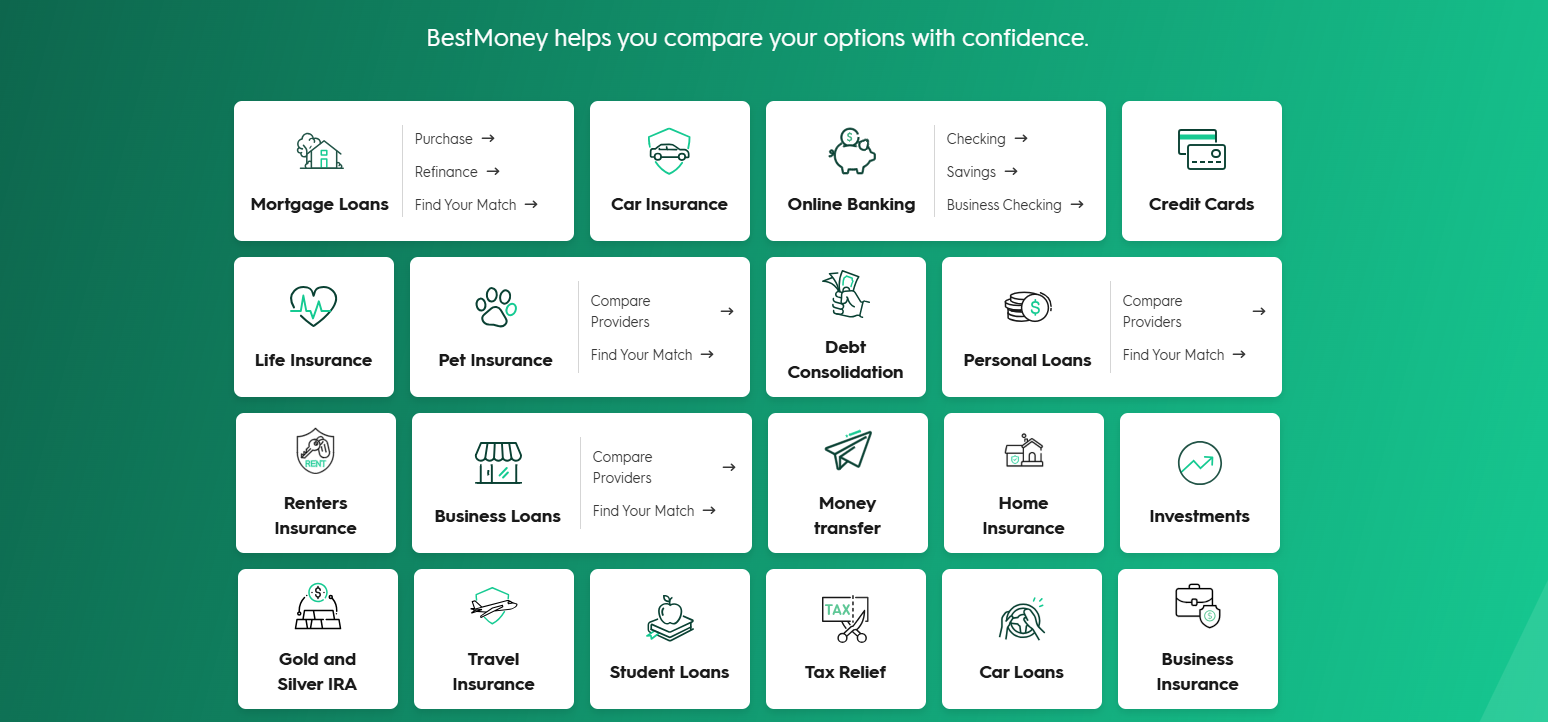
To find the best deals and offers, and also to help streamline the process of comparing APYs and other account features, try using a dedicated comparison site that puts all the information you need in one place. There are many reputable sites you can visit, and although they make their money through affiliate links, the information is still editorially reviewed and comprehensive.
But because there are so many comparison tools on the web, the quality varies. For example, you can use a site like BestMoney to compare a range of financial products, not just savings accounts, and it can help you arrive at your shortlist. You can quickly view APYs and any promotional offers, as well as read through reviews.
If you’re looking for a site with the most HYSA options, you may want to visit DepositAccounts, which focuses entirely on banking. While the list of banks can feel overwhelmingly long compared to many other sites, there are plenty of filters to help you sort through the choices.
Getting Started with High-Yield Savings

While it can seem easier on the surface to stick with your current banking situation, it’s best to open up a high-yield savings account sooner rather than later, as the interest can add up significantly and help you reach your financial goals.
The APY is important for determining how much you’ll earn, but be sure to read the fine print to ensure that you’re not solely looking at the promotional APY, which is only good for a limited time, or tiered APY offers, for which you may or may not qualify. Plus, there are factors to consider beyond the APY, such as any minimum opening deposit requirements or withdrawal limits, as well as the customer experience.
Because the sheer volume of options can be intimidating, it’s a smart idea to use online HYSA comparison tools to see how the offers stack up.