



Known for his no-nonsense approach and hands-on leadership, Jonathan blends real-world experience with technical precision, whether he’s streamlining accounting workflows, optimizing tax strategies, or forecasting financial performance.
Outside of the numbers, he’s a fitness enthusiast who trains in his home gym before sunrise and has a knack for marine aquariums, construction projects, and keeping things humble, with no flashy titles needed.
- Strategic Capital vs Stone Street Capital: Who Should Buy Your Structured Settlement? - February 19, 2026
- The Best Financial Comparison Sites for Travel Credit Cards - January 17, 2026
- BestMoney.com Review: A CPA’s Perspective on a Financial Aggregator - January 15, 2026
If you’re looking to sell your structured settlement, you’re essentially trading future security for present liquidity. You’re selling an asset that is tax-free and guaranteed at a discount.
As a CPA, I see people make this trade often — some do it well, while some get eaten alive.
The market hasn’t made it any easier. You’ve seen the commercials that claim you can get your cash “NOW.” You’ve heard the fancy jingles. But all this fancy marketing does is turn a complex financial transaction into nothing more than a payday loan — which is both dangerous and disingenuous.
That’s why you need a buyer that acts like a partner and not a shark. You need transparency. You need options. Two of the biggest names in this space are Strategic Capital and Stone Street Capital. They both buy payment streams. They both have money. But they operate differently. Let’s talk about how.
Strategic Capital: The Consultative Approach

Strategic Capital is a family company that positions itself differently from most of the industry. They don’t run the loud, aggressive TV ads you might be used to; their reputation is built on a more consultative foundation that treats annuitants as part of the family.
The “Why” Matters
The biggest differentiator I see with Strategic Capital is their focus on the “why.” While most factoring companies spend more time focusing on the amount that you want to sell, Strategic Capital spends more time talking about why you want to sell in the first place.
This sounds like a small distinction, but it’s not. It’s the difference between a teller and an advisor.
If you tell a typical factoring company you need $50,000 for a renovation, they will calculate how many payments they need to buy to give you $50,000. They send the contract, and you sign.
Strategic Capital tends to look at things a bit deeper. They look at your specific financial needs to determine the optimal amount to sell, and they even often advise clients not to sell if the math doesn’t make sense. And if the discount rate would be too high for your specific payment stream, they are known to say so.
As a CPA, I respect this. It builds trust and suggests that they are playing the long game, not just trying to close a deal before you change your mind.
The Power of Partial Sales
Strategic Capital’s focus on partial sales is where they really shine.
In a partial sale, you sell only a specific number of future payments (or a specific portion of each payment), and you keep the rest.
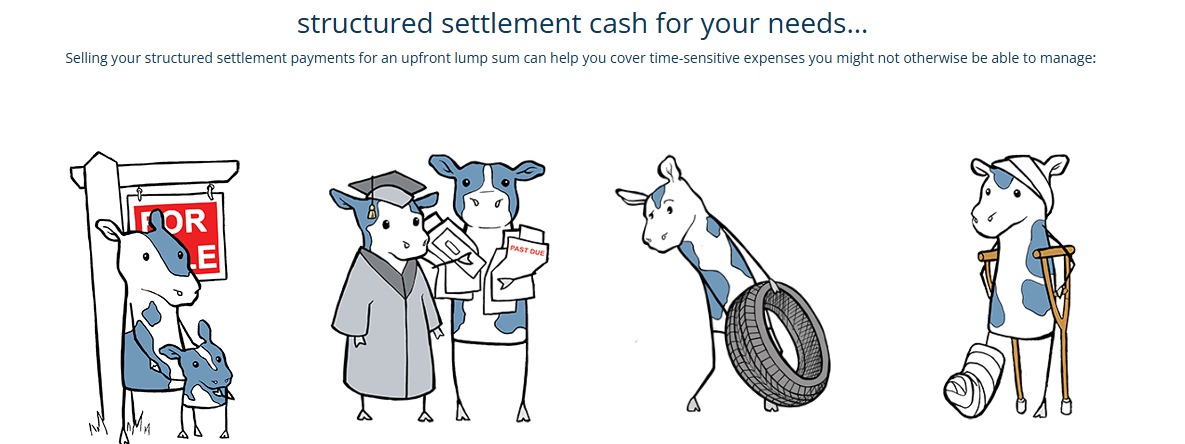
According to their data, roughly 85% of the transactions that Strategic Capital funds are partial sales — the vast majority of their clients are not cashing out completely and are instead getting the money they need for a specific purpose (like a house, debt, or tuition), while leaving the rest of the settlement intact for their future.
This approach protects your long-term outlook. It minimizes the impact of the discount rate because you’re only applying it to a fraction of your assets. You get your liquidity, but you don’t destroy your safety net.
Transparency in Pricing
The structured settlement market is notorious for hidden fees and confusing discount rates, but Strategic Capital has a reputation for clarity. When they give you a quote, they explain what it means, break down the effective rate, and go over the legal fees.
Most notably, they don’t use high-pressure tactics, and you don’t get the sense that a sales rep is hounding you. Instead, you deal with a representative who acts more like a case manager — they even walk you through the court process, managing expectations rather than overpromising on speed.
What Strategic Capital Is Not
Strategic Capital is not the fast-food option; if you’re looking for a company that will wire you cash in 24 hours without asking questions, they’re not the right fit. Their process is thorough, and thoroughness takes time.
They also lack the massive brand recognition of some competitors, and you might not have even heard of them until you started doing deep research. For some people, the lack of a famous jingle is a worry, but I view this as a feature, not a bug.
Stone Street Capital: The Giant

Owned by industry giant JG Wentworth, Stone Street Capital is a heavyweight that many people have heard of. Having been around since 1989, with an A+ rating from the Better Business Bureau, they have thousands of customers and claim to be one of the oldest companies in the industry.
The Speed Factor
Stone Street Capital markets itself on speed and ease, with their website and materials focusing heavily on “cash now” — a term that might be familiar from its parent company, the commercial-famous JG Wentworth.
To their credit, they have the team to back this up, with a large legal network and the resources to move quickly. They know the court systems in every state, so if your paperwork is in order, they can push a deal through as fast as the law allows.
Of course, it’s important to note that your actual timeline is entirely dependent on the court. Where Stone Street promises time savings is in the preparation and filing itself; you’re still at the mercy of the court’s schedule. But for a client in a true emergency (like someone facing foreclosure), any time savings can be very valuable.
The Lump-Sum Focus
Stone Street can do partial sales, but their marketing leans heavily toward big checks. And while big numbers look nice, you have to look at the cost of that capital. They’re not just giving it to you for free, after all.
Large, marketing-driven firms often have higher overhead, spending millions on ads. That money has to come from somewhere, and that somewhere is usually the spread — the difference between what your payments are worth and what they pay you.
What Stone Street Capital Is Not
Stone Street Capital has many positive reviews that credit the company’s efficiency, but the overall feel is different from Strategic Capital.
Stone Street is very corporate, a system where you’re a lead in a database. This is unsurprising, given it’s one of multiple JG Wentworth subsidiaries. For many, this is fine, since this is a business transaction at the end of the day — but you won’t get the same level of personalized financial counseling that you would find elsewhere.
And while it does mean more efficiency, their size can also be a disadvantage. If you have a unique situation like a complex trust or a divorce decree involved in the settlement, you might struggle to get a customized solution from a company built on volume.
Head-to-Head Comparison
With all that said, let’s break down the competition with a quick comparison table and a factor-by-factor analysis.
| Feature | Strategic Capital | Stone Street Capital |
| Established | 1994 | 1989 |
| Primary Approach | Consultative & advisory | High-volume & transactional |
| Focus on Partial Sales | High priority (approx. 85% of deals) | Available, but marketing emphasizes lump sums |
| Speed of Funding | Deliberate & thorough | Fast & efficient |
| Customer Experience | Personalized case management | Corporate system |
| Transparency | High (explains the “why”) | Standard (compliant) |
| Best Suited For | Sellers who want to protect their long-term wealth | Sellers who need cash as fast as possible |
Transparency and Trust

Strategic Capital leads with education. Their representatives spend time explaining the time value of money, and they are open about the fact that selling is expensive and should be a last resort. To me, this “anti-sales” approach builds immense credibility, and you really feel like they’re on your side of the table — even down to helping you fill out court paperwork. They’re a family company, and you feel it in every interaction; in an industry riddled with scams and get-rich-quick promises, they treat you as part of their family and go out of their way to earn (and keep) your trust.
Stone Street Capital is professional and efficient, but the focus is clearly on closing the deal. The transparency is there because it’s required, but it doesn’t feel like a core pillar. You need to be sharper when dealing with them, and you need to read the fine print yourself.
Winner: Strategic Capital’s consultative model is safer for the consumer.
2. Flexibility and Partial Options

Strategic Capital’s 85% partial sale statistic is the deciding factor here. They view the settlement as a renewable resource, structuring deals that solve the immediate problem without killing long-term income.
Stone Street Capital can absolutely do partial sales, but their machine is built for volume. They prefer standard blocks of payments, and it’s easier for them to buy five years of payments than to calculate a complex partial split that preserves your inflation adjustment. They’ll do it if you ask, but they probably won’t suggest it first.
Winner: Strategic Capital wins here because they prioritize asset preservation.
3. Speed and Efficiency

Strategic Capital is not slow, but they are deliberate. They take the time to measure twice and cut once. However, if you need money yesterday, the consultative process might feel like a delay.
Stone Street Capital is a machine. They have the staff and the capital to fund deals fast. If you are in a jurisdiction with a quick court docket, Stone Street will get you to the finish line quickly.
Winner: Stone Street Capital’s scale gives them an operational edge in speed.
4. Reputation and History
Strategic Capital was founded in 1994, and in a world of fly-by-night companies, I feel like this type of longevity speaks volumes. They want to earn repeat business and be recommended by folks who have used them before.
Stone Street Capital was founded in 1989 and has an A+ rating with the BBB. They’ve weathered the industry, and they’re operating on law-abiding principles.
Winner: This one is a tie since both have stood the test of time.
The CPA’s Verdict
Selling a structured settlement is inherently high-risk. You’re giving up a tax-free guarantee, after all, so you need a partner who minimizes your risk.
Stone Street Capital is a viable option if you know exactly what you want, have negotiated a hard number, and want it done fast. They’re definitely a capable transaction partner.
However, in my opinion, Strategic Capital is the better choice for the thoughtful seller. Their focus on partial sales aligns with sound financial principles, and they help you solve your cash flow problem while keeping your personal finances healthy. They ask the questions a financial advisor would ask, ensuring you’re not selling $100,000 of future income to pay a $20,000 debt.
The company that cares about your future is the one you should do business with, which means the edge goes to Strategic Capital here. They treat your settlement like an asset to be managed, not a product to be sold.