


Structured settlement companies have been receiving a lot more public attention lately after John Oliver dedicated an entire segment of Last Week Tonight to the industry. The segment focused heavily on the risks involved when people sell future settlement payments in exchange for a lump sum of cash, especially when those decisions are made during periods of financial stress or emotional vulnerability.
Oliver highlighted aggressive advertising, pressure tactics, and situations where people may not fully understand the long-term financial consequences of giving up future payments. He also discussed the fact that many structured settlements originate from serious injuries or life-changing accidents, which can make these financial decisions even more complicated for individuals and families already dealing with major challenges. And frankly, many of the consumer protection concerns raised in the segment were legitimate.
That being said, the conversation around structured settlement companies is often more nuanced than simply asking whether the entire industry is a scam. The real issue is not whether structured settlement companies exist at all, but whether consumers fully understand the tradeoffs involved before making a decision.
What John Oliver Got Right About Structured Settlement Companies

The structured settlement purchasing industry comes with real consumer protection risks, and John Oliver’s segment highlighted several issues that deserve honest discussion, especially for people who are already overwhelmed by life-changing situations.
Aggressive Advertising and Pressure Tactics
Companies like JG Wentworth dominate the airwaves and social media with persistent ads about “getting your cash now.” While those jingles might sound catchy, the nonstop emphasis and urgency can feel intentionally designed to push people into making quick money decisions. Many companies use high-pressure scripts or repeated calls, aiming to get someone to agree before they fully weigh the pros and cons.
Emotionally Vulnerable People Are Often Targeted
Many people approaching these companies are already dealing with accidents, lawsuits, or sudden financial stress, moments when decision-making isn’t easy and thinking isn’t as clear as it normally would be.
The “Easy Money” Framing Can Be Misleading
The focus is usually on how fast consumers can get a lump-sum payout and the supposed freedom of turning long-term payments into quick cash. Companies rarely explain that selling future payments can involve significant long-term financial tradeoffs, especially when people are focused primarily on immediate cash needs.
Lack of Independent Advice is Problematic
Most settlement purchasing offers don’t start by sending people to a neutral third party for financial counseling first. The professionals on the phone or in person work for the company, not you, and only sometimes are people urged to slow down, consult their own advisor, or get a second opinion. Without truly independent advice, someone can be pushed into a decision that does not genuinely serve their long-term interests.
Are Structured Settlement Companies Legitimate?
Despite the tough portrayal in some news stories, structured settlement companies are not automatically, or inherently, scams. The industry operates legally, is regulated in many states, and any purchase of settlement payments requires a court to sign off on the deal.
Legality vs. Ethics
However, just because a business practice is legal doesn’t mean the deal they are offering is moral or serves your best interests. Being legally allowable is the baseline, but the ethics and transparency of how structured settlement companies handle their sales process are typically where everyday people can get burned.
Spotting the Difference: Responsible vs. Irresponsible Deals
There’s an important distinction between a responsible, well-structured settlement sale and those that exploit vulnerabilities or take advantage of short-term stress.
Legitimate transactions will ensure you fully understand the financial trade-offs, clearly spell out what you’ll get versus what you’re giving up, and ideally send you for thorough independent legal or financial advice before completing the sale. Regulated companies should slow things down for vulnerable sellers and invite any questions, never pressuring someone to sign something right away.
Irresponsible or shady sales practices rely on high-pressure offers, fast paperwork, and focus only on quick money today, not the future. They may gloss over or deliberately avoid talking about loss of long-term value, or even press you before you’ve discussed it with family, a lawyer, or a certified financial planner. This approach is where genuine harm can happen even within technically legal sales.
What John Oliver Didn’t Discuss: Why Some People Sell Structured Settlements in the First Place

While John Oliver highlighted real and troubling abuses within the structured settlement buying industry, there’s another important side to the story. Not everyone who sells their settlement is doing so out of poor judgment; some are driven by genuine, pressing needs that long-term payments can’t address.
Facing Medical Debt or Emergencies
A major reason people consider selling their future payments stems from overwhelming medical expenses. Surgeries, hospital stays, and ongoing care may demand large up-front amounts that a monthly or annual settlement schedule simply doesn’t cover quickly enough. When someone needs treatment, equipment, or lifesaving procedures, a lump sum can seem not only attractive, but absolutely essential.
It’s not just injuries; chronic illnesses, insurance gaps, and even expenses from an accident not originally part of the settlement can all bring sudden, impossible bills that can only realistically be paid with immediate, available cash.
Housing Instability and Avoiding Bankruptcy
Another factor is keeping a roof over your head, especially if someone falls behind on a mortgage, needs to relocate because their injury left them unable to work, or even faces eviction. In these moments, delaying help for additional years to wait for scheduled payments can mean filing for bankruptcy or even facing homelessness. For some, quick cash from selling settlement payments can solve this problem.
Divorce, Major Life Changes, and Financial Rescue
People’s personal lives rarely unfold as planned. Divorce, job loss, family expansion, or caring for dependents bring costs that no settlement calculations could fully anticipate years in advance. Selling part of a settlement can be a painful but necessary option. Things like supporting a child’s educational journey or helping aging parents may require reshaping how settlement funds are accessed.
Escaping High-Interest Debt
Another big motivator is escaping expensive high-interest debt, like payday loans or mounting credit card bills that skyrocket from emergencies or periods without work. Even if it means giving up some of the settlement’s total future value, many find that reducing interest charges now could leave them much better off than drowning in other fees.
John Oliver doesn’t suggest that everyone selling a structured settlement is making a mistake or lacks the ability to understand what they’re doing. However, he also doesn’t spend much time discussing the very real financial pressures that can make someone feel like selling future payments is their only realistic option.
Structured settlements are often set up for decades in the future, aiming to guarantee reliable income following a serious injury or wrongful death. This provides long-lasting security in a perfect scenario, but nobody’s life stays static for 20 or 30 years. For many, priorities and needs can change overnight. A scheduled payment plan may provide more total value over time on paper, but immediate cash and long-term income serve very different purposes during a real financial crisis.
Characteristics of Responsible Structured Settlement Companies

Responsible companies make sure that you have a clear picture of what you’re trading away and go out of their way to ensure you aren’t making a decision you’re going to deeply regret in the future. They’ll encourage you to speak to an independent advisor so you have time and facts to make the right decision.
Rather than pushing for a full cashout, they may suggest partial sales, leaving you with future payments in addition to the lump sum you’re getting. They truly slow the process down when clients are facing big decisions or special vulnerabilities.
It’s not uncommon for them to recommend waiting, not selling at all, or only selling a piece. Sometimes, if they see that selling would harm the client’s future security, a responsible company genuinely says no and walks away from the deal.
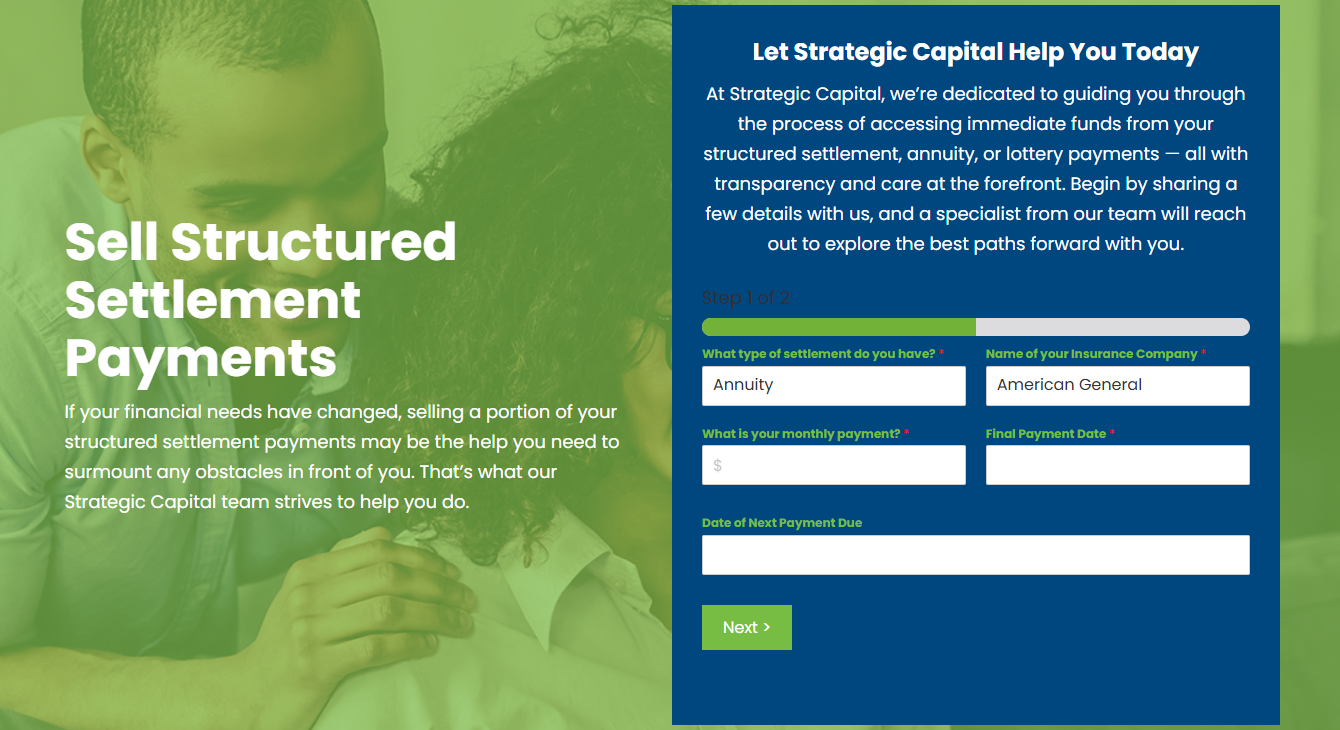
Strategic Capital, for example, is a company that seems to really try to keep any potential clients’ best interests in mind. They try to help clients keep as much of their settlement as possible. They’ll provide an overview of when selling might not be the right choice, taking the time to talk through partial sales and avoiding the pressure tactics that companies like JG Wentworth use.
In many instances, their team will turn down cases if selling future payments clearly isn’t in a person’s best interest. Their approach appears to focus more heavily on preserving future payments when possible, encouraging independent guidance, and slowing the process down before a client makes a final decision. That type of preservation-focused approach stands in contrast to many of the high-pressure tactics critics of the industry often point to.
Turning clients away is actually better for their business sometimes.
How to Protect Yourself Before Selling a Structured Settlement

If you or a loved one is thinking about selling part (or all) of a structured settlement, how you approach the process can make a huge difference in your future financial health. Structured settlements can be a life-changing financial tool if treated carefully, but they can also leave you financially strained if pressured or rushed.
Talk to an Independent Advisor
One of the safest moves you can make is to talk with an independent advisor before you sell. An original settlement attorney, structured settlement consultant, or objective financial planner can clarify the long- and short-term impact of choosing cash now over long-term payments.
It doesn’t matter how sure you feel about your decision or how dire you think the situation is; you should still get independent advice to make sure there aren’t downsides or other options you aren’t considering. Any honest buyer should support, not discourage, your getting advice and give you the space and time you need. If you aren’t offered referrals to third-party guidance, or if you’re pressured to skip it, this is a significant red flag.
Ask About Partial Sales
Many people don’t need to liquidate their entire settlement to handle their present needs. Selling just enough payments to address your toughest financial moment may help give you flexibility while safekeeping most funds for later in life. Responsible companies frequently lean on this strategy to strike a more balanced approach between short-term decision-making and lifelong protection.
Compare Multiple Offers
No two companies are exactly the same. When you receive quotes on how much cash you’ll get in exchange for your schedule of guaranteed payments, every offer may look a little different. Discount rates, the real cost of selling so many years’ worth of payments today, can vary widely from one buyer to another. Be clear on what you’re giving up and what you are getting in return and don’t be afraid to shop around.
Never Feel Pressured To Sign Quickly
Companies that employ pushy tactics are almost never considering your best interests. Watch for promises of “instant cash out,” “limited time only” offers, or demands that you fill out lots of paperwork really quickly. If someone refuses to slow down for questions and brushes aside concerns, you may want to keep looking. This is a huge decision, possibly one of the biggest you will make in your life. You want to make sure you do it properly and won’t regret it later. If something just doesn’t feel right, it’s okay to keep looking.
Explore Other Alternatives
There may also be other financial options or strategies that people simply haven’t explored yet before speaking with a factoring company. Depending on the situation, an independent attorney or financial advisor may help someone evaluate alternatives such as restructuring debt, negotiating payment plans, refinancing certain obligations, or temporarily delaying major expenses before making a permanent decision regarding future settlement payments.
This is another reason why independent guidance matters so much. Many people understandably feel trapped between “sell the settlement” or “keep struggling financially,” when in reality, there may be additional options worth discussing before making such a significant long-term financial decision.
So, Are Structured Settlement Companies a Scam?

Some settlement purchasing companies absolutely deserve criticism, and there’s no doubt that too many vulnerable people have been harmed by rushed processes or high-pressure sales tactics. It’s only natural for consumers to approach these transactions with healthy skepticism, especially given the industry’s history.
However, it’s just as true that not every structured settlement sale is harmful; many are the result of thoughtful consideration and offer real, practical benefits to people facing urgent life needs.
Navigating the decision to sell settlement payments is rarely simple, but consumers should never feel pressured into making major financial decisions quickly or without fully understanding the long-term consequences. The most important question is not whether a company advertises on television or buys structured settlements; it’s whether you fully understand the tradeoffs involved, feel comfortable slowing the process down, and have access to truly independent guidance before making a decision.