



- JG Wentworth Alternatives: What to Know Before Selling Structured Settlement Payments - April 6, 2026
- Best Factoring Companies for Structured Settlements - March 18, 2026
- Can I Sell My Retirement Annuity? - March 4, 2026
People nearing the end of a vehicle lease generally return their car to the dealer where they acquired it or to another dealer that sells the same brand. Returning the vehicle to the dealer is a good choice for many, but depending on your circumstances and preferences, working with third parties such as Lease End or CarMax to buy out or sell your vehicle can be very helpful and save you substantial money.
When considering which option is best for your specific situation, between Lease End or CarMax, here are some common situations, as well as which company makes more sense based on your scenario.
| Scenario | Lease End | CarMax |
| Does your leased vehicle have positive or negative equity? | Positive or Negative | Positive |
| Do you want to keep your vehicle after the lease ends? | Yes | No |
| Does your leasing company allow these transactions? | Yes | Check with CarMax |
| Are you willing to spend the time needed to save money? | Yes | Yes |
After 20+ years in the car industry, one thing I know is that comparison shopping is valuable not only when you acquire a vehicle, but also when you dispose of one. Considering and working through these options will make you a more informed and confident consumer, even if you decide to return the vehicle to the originating dealer in the end.
Your Leased Vehicle’s Equity

You may have positive or negative equity in your leased vehicle. You have positive equity if your car’s current market value exceeds the residual value included in your lease. If the residual value exceeds the market value, you have negative equity.
It is not unusual to have a significant financial stake in your leased vehicle. Edmund’s 2025 Lease End Lease Buyout Report showed that some models had up to a 35% difference between their projected residual value and their trade-in value, and that, for nine models, the average lessee had more than $6,000 in equity. Given the amount of money involved, you must understand your vehicle’s equity and your options for retaining it.
At the time you leased your vehicle, the financing company estimated the car’s residual value, or what your car would be worth at the end of the lease, based on years of historical information and your planned mileage. Sometimes the leasing company underestimates the residual value due to unexpected economic or social changes that increase the value of your model or of used cars in general. If your car has a higher demand today than expected when you leased it, it may be worth more than its residual value, resulting in positive equity.
Your vehicle may also be worth more than its residual value if you drove it less than you planned. Your expected mileage is a key factor in estimating the residual value, and a vehicle with fewer miles is generally worth more than was anticipated. If your car has more miles than the lease allowed or it has condition issues, your vehicle may be worth less than the residual value, meaning you will owe money and have negative equity.
Knowing your vehicle’s equity is critical to determining the best path, so you should assess your position early on. You can easily determine your vehicle’s current market value using the Edmunds appraisal page or similar independent sites.
Once you determine your vehicle’s market value and compare it to the residual value in your leasing contract, you’ll know whether you have positive or negative equity and how much, which will shape which avenues you can explore with your vehicle.
Consider Lease End When You Want to Keep Your Vehicle
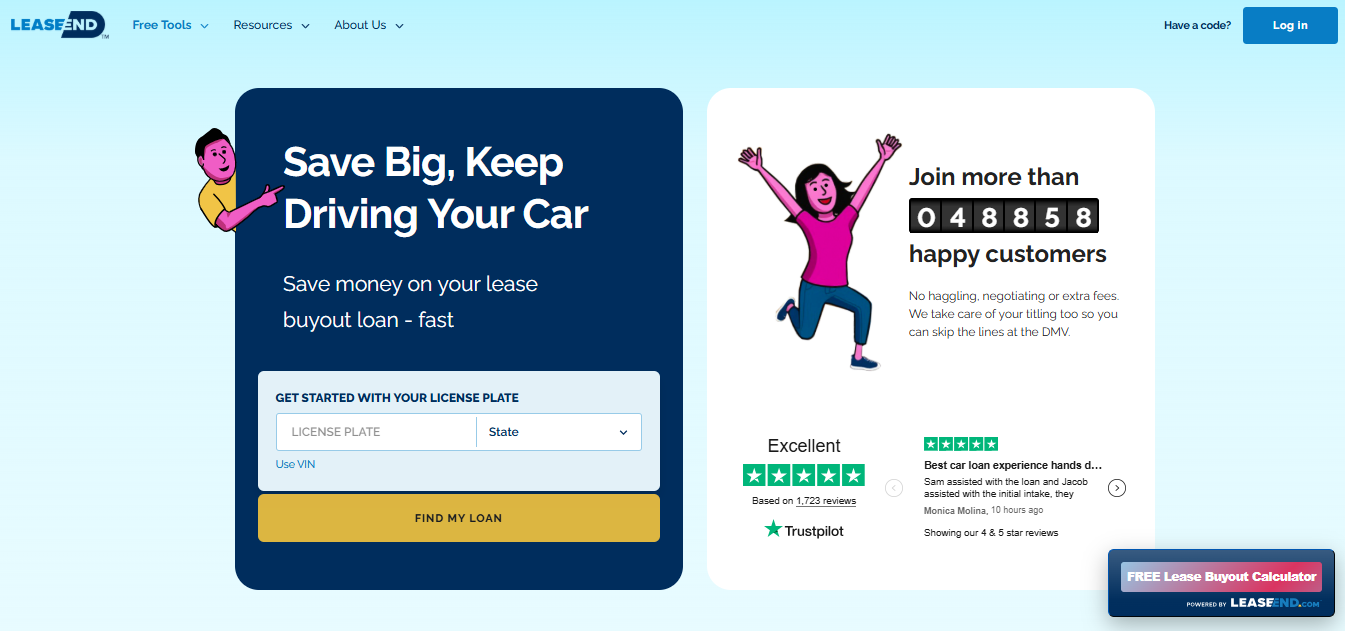
Lease End can help if you plan to keep your vehicle at the end of your lease. Regardless of whether you have positive or negative equity in the car, Lease End helps you buy out the lease rather than return the vehicle to the dealer. You buy out the lease by paying the leasing company the vehicle’s residual value, after which you own the car.
If you do not have or want to use cash to pay off the residual value, you can work with the dealership and leasing company to borrow the money. The process is very similar to borrowing money to buy a used car, but in this case, you know exactly what you are getting since you drove the vehicle under a lease.
Rather than financing your car through your dealer and leasing company, you can work with Lease End and handle the entire process online or by telephone. After granting Lease End permission, they will contact your financing company to confirm your buyout amount, which is the residual value plus any associated taxes and fees.
Knowing the buyout amount, they will obtain quotes from multiple financing companies to find the one whose terms work best for you. In addition to Lease End’s convenient process, you benefit from their comparison shopping of your financing options. Of course, if your vehicle has positive equity, that value can go toward your down payment, reducing the amount you need to borrow. If you have negative equity, they add it to your loan amount.
Consider CarMax to Dispose of Your Vehicle
If you had a good experience with your vehicle and the dealership, and plan to acquire another car of the same brand, returning the vehicle to the dealer may be your best choice. However, if your vehicle has positive equity, the dealer is not obligated to reimburse the difference between your car’s market and residual values. They can pocket the difference, which is why CarMax and its competitors can be helpful.
CarMax buys and sells used cars from consumers and is transparent and consumer-friendly in its practices. CarMax can be a good option for those who want to dispose of their leased vehicle and:
· Do not want to replace it
· Buy or lease another car from CarMax
· Buy or lease from a different manufacturer than the leased vehicle
· Buy another car in a private transaction.
CarMax determines the price it will pay for a used or off-lease vehicle based on its current market value, so it is a desirable option if you want to dispose of a car with positive equity. Like Lease End, the CarMax process is relatively painless. You can have your vehicle appraised and handle other parts of the process by visiting one of CarMax’s physical stores, or you can handle most of the process online. If you handle the process online and receive an offer for your vehicle, you must turn the car in at a CarMax store, where they will verify that the vehicle’s mileage and condition match what you reported online.
The primary challenge when selling your vehicle to CarMax is that auto financing companies often restrict when and to whom you can sell your leased vehicle. Some companies allow leased cars to be sold within 6 months of the end of the lease, while others limit the period to 1 month before the lease ends. Most importantly, auto financing companies increasingly do not allow customers to sell leased vehicles to third parties such as CarMax. As of this writing, CarMax is unable to acquire vehicles leased through:
· Acura Financial
· Ally Financial
· Audi Financial Services
· BMW Financial Services
· Ford Credit
· GM Financial
· Honda Finance
· Infiniti Financial Services
· Lincoln Credit
· Mazda Credit
· Nissan Motor Acceptance
· Southeast Toyota Financial / World Omni
· Tesla
· Volkswagen Credit
· Volvo Financial
Since this list can change, be sure to check CarMax’s current list of leasing companies for which this applies.
The manufacturers’ financing companies have several business reasons for this policy. First, off-lease vehicles are a significant source of inventory for certified pre-owned programs and dealer used-car lots, so manufacturers and their financing arms have a vested interest in keeping them in their dealer networks.
Besides providing a regular flow of inventory, the off-lease vehicles reduce the time and money dealers spend acquiring vehicles at auctions, so they save money there as well. Finally, customers who return leased vehicles to the dealer are more likely to buy or lease from the same manufacturer again. So, not only do off-lease vehicles feed the manufacturer’s certified pre-owned programs, but they also encourage new vehicle sales and leases.
If your financing company does not allow sales to CarMax and you have substantial equity in the vehicle, you can purchase the vehicle from the leasing company yourself and then sell the car to anyone else, including CarMax. Of course, that approach takes time, involves risks, and you’ll need to be sure you have a handle on all the taxes and fees in advance to make it a wise financial decision.
The Value of Convenience and Expertise

We pay for convenience and expertise in all aspects of life. For example, we eat at fast food restaurants because they are convenient, and we dine in fancy restaurants for the service and food quality. The same logic applies to how you choose to handle your vehicle when it comes off lease.
Knowing how much equity you have helps you decide the best path for the vehicle. If you have limited equity, you can choose the easiest or most convenient route since there isn’t much money at stake. However, the more equity you have in the vehicle, the more you should take steps to keep the money for yourself. Those who are savvy negotiators and knowledgeable about the vehicle sales, leasing, and financing processes may want to handle the process on their own, up to and including selling the car privately.
On the other hand, most people lack the expertise or do not want to spend time coordinating the process, so they turn to companies like Lease End or CarMax, which have shown they have customer-friendly policies. Those companies have the processes and expertise to handle everything. Both companies make money on the deals they close, but, as with paying for food in a restaurant, the convenience and expertise they offer are often worth it to many consumers.
Which is Best for You?
Knowledge is power, and as a consumer nearing the end of a vehicle lease, your first step should be to determine the vehicle’s equity. If you are interested in keeping the car past the end of the lease, consider working with Lease End to find attractive financing options. If, on the other hand, you have equity in the vehicle and do not want to keep the car at the end of the lease, contact CarMax to determine whether they can buy your vehicle and the amount they will pay.
Under either scenario, knowing the dollars at stake helps you determine your best options. Of course, the greater your vehicle’s equity, the more critical it is to investigate Lease End, CarMax, or other options to make the informed choice that is best for you.