




- How to Use Your HSA/FSA for Sleep Apnea Treatment - May 19, 2026
- Renter Insurance Quote Comparisons: Finding the Best Coverage for Your New Home - February 16, 2026
- Which Pet Insurance Should I Get? How to Find the Best Plan - January 22, 2026
So, you’ve fallen in love with your leased vehicle, and you want to buy it outright, or you’ve had enough of your lease, and you want out. What are your options?
Getting out of a car lease (whether you want to keep the vehicle or not) is possible, but it’s never as easy as it should be. Dealerships often make life difficult for drivers in this situation; they sometimes try to charge inflated prices or add on fees, and there’s almost always a mountain of paperwork to complete. It can also be more difficult to secure financing for a lease buyout than for a straight vehicle purchase.
Because of these problems, many people choose to let third parties handle the process on their behalf. Let’s look at two of the leading players in this space: Lease End and Swapalease.
How Do Lease Buyout Companies Work?
Lease End and Swapalease approach the lease exit process in different ways, as outlined below.
Lease Transfer Via a Marketplace (Swapalease)
Swapalease, as the name suggests, facilitates the transfer of car leases from one driver to another.
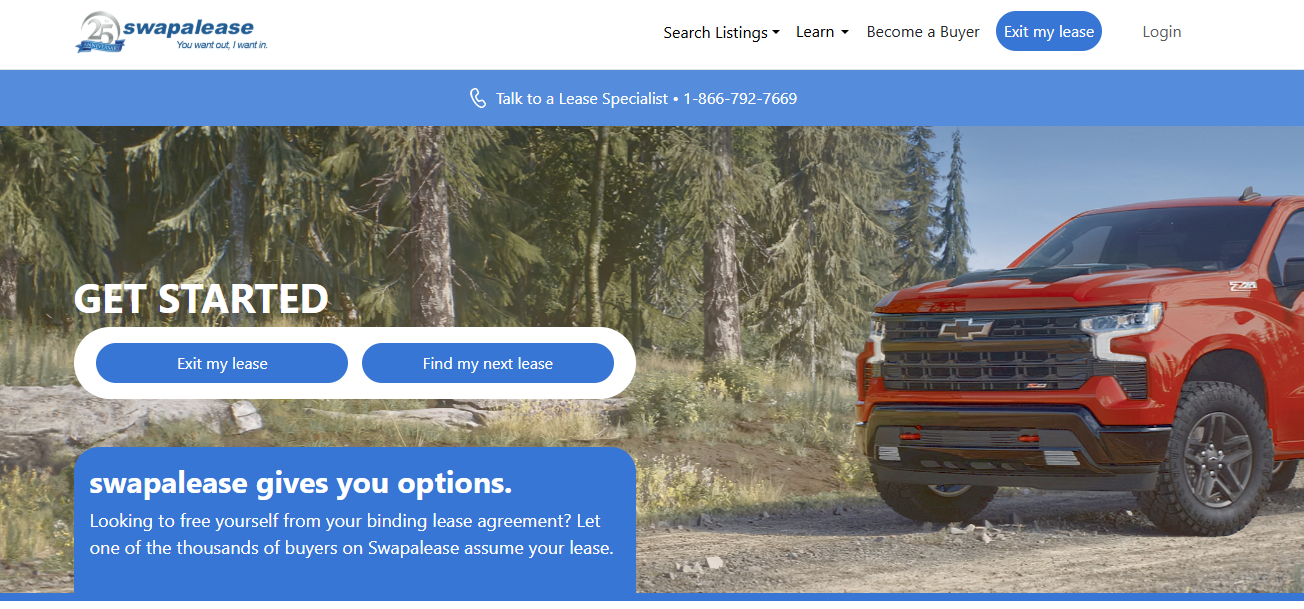
You create a listing for your leased vehicle on the platform, including details like monthly payment, months remaining, mileage allowance, and any incentives. From here, you pay the platform a listing fee to advertise your lease. Interested parties can browse these listings and contact you (Swapalease also requires buyers to pay a registration fee to get in touch, which can diminish your reach on the platform as a seller).
Once you find someone ready and willing to assume your lease, both of you must coordinate with the leasing company to get the new person approved. If the leasing company permits the transfer (not all do), you and the new lessee complete the required transfer paperwork through the lender.
The new lessee typically pays any manufacturer’s lease transfer fee (often $100–$500) and assumes the lease payments going forward. Finally, you hand over the car to the new lessee, and the lease is formally transferred under the same original terms.
Lease Buyout Via an Online Service (Lease End)
Lease End, on the other hand, typically facilitates the buyout of leases by drivers themselves.
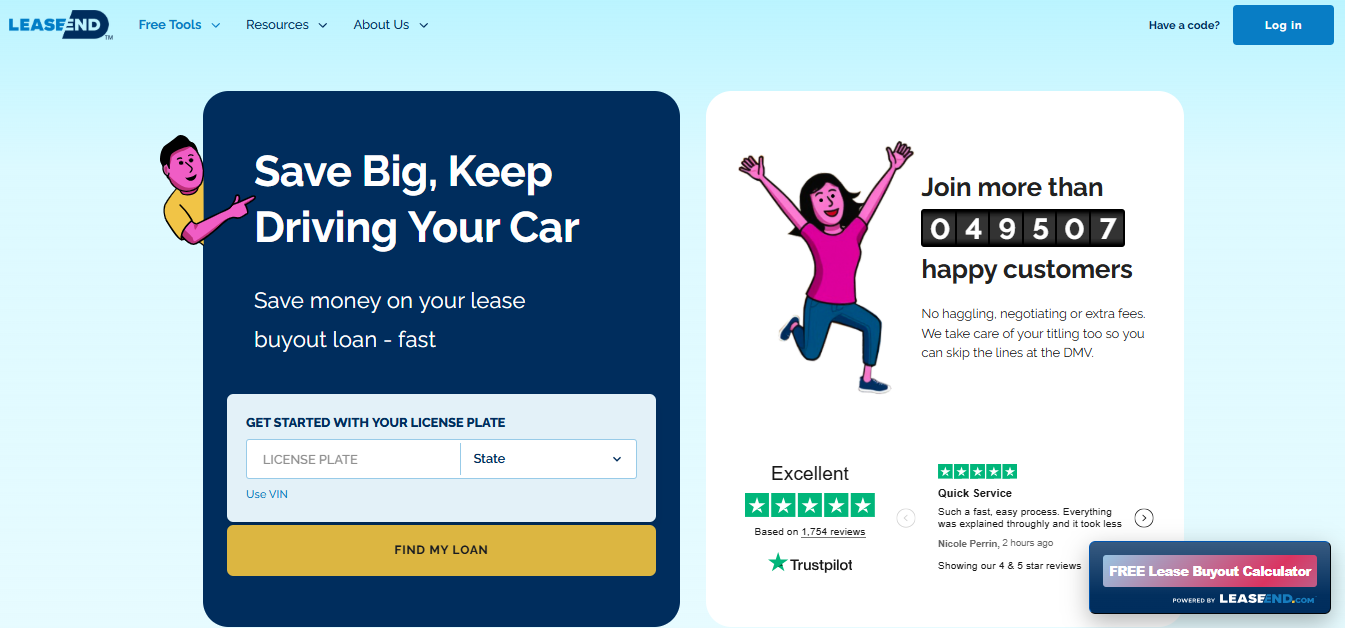
You start by providing your lease details to the Lease End platform. The company uses these to obtain a buyout price from your leasing firm (residual value plus any remaining payments, taxes, or fees).
If you want to keep the car, Lease End will help you secure financing by shopping around to multiple banks and presenting you with loan offers to cover the payoff amount.
You can also choose to sell the car, in which case Lease End can effectively buy the car from you. The company will pay off your lease and handle the title transfer, then you walk away (and if the car’s market value is higher than the payoff, you pocket the difference as equity).
Lease End’s advisors also guide you through paperwork, coordinate with the lender on your behalf, and manage DMV title and registration work; if you’ve ever handled a lease buyout before, you’ll know just how useful this part of the service can be.
Lease End vs Swapalease: Which Should You Choose?
First, it’s worth reiterating that Lease End and Swapalease provide different services. If you want to buy your car outright or to sell it, go with Lease End; if you want to just hand the lease off to someone else, go with Swapalease.
For everyone who hasn’t quite made that decision yet, I’ve compared the two companies in further detail below.
Process & Ease of Use
Lease End
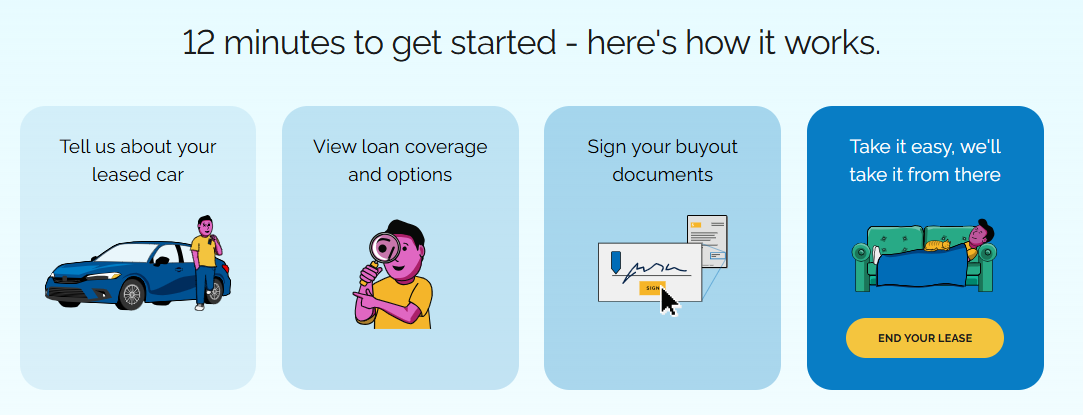
Lease End’s platform was designed with speed and simplicity in mind. This is one of its biggest selling points, in my view; the biggest problem with exiting leases is how labor-intensive it can be, so you want a service provider that can relieve you of that hardship.
You just have to fill out a quick form online or have a short phone call, and Lease End takes it from there. You won’t need to visit a dealership or navigate confusing bank processes; everything can be done digitally, often in a single day.
Crucially, Lease End’s team will shop for a low-interest buyout loan on your behalf and coordinate the payment to the leasing company, as well as arranging the title transfer. This part of the process is probably the most stressful for those exiting leases by themselves; Lease End does a great job of making it easy for you.
Swapalease
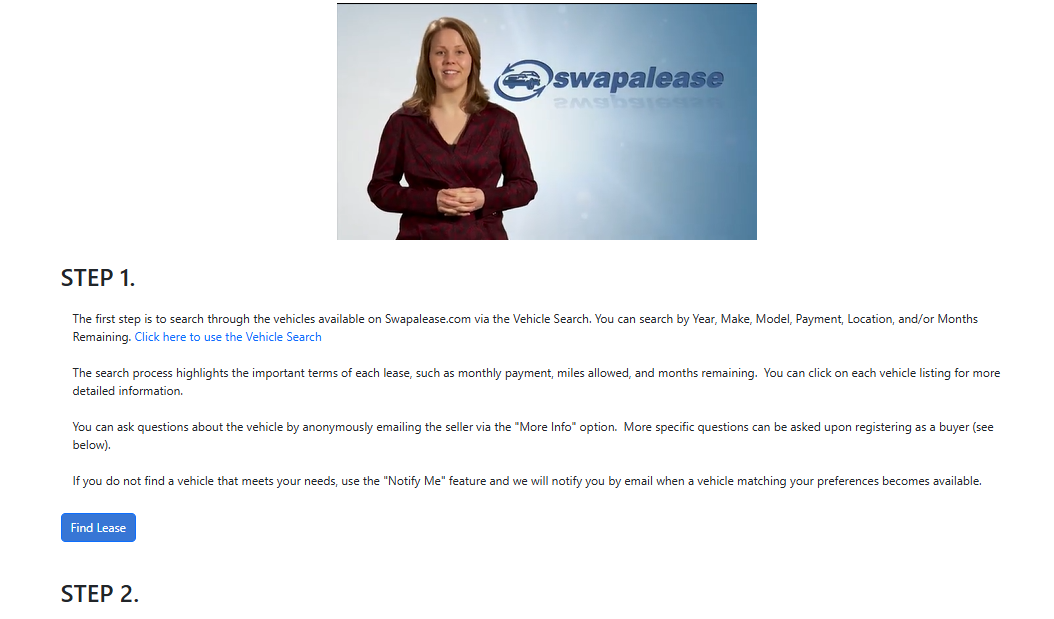
By contrast, Swapalease requires a multi-step, DIY process that can be considerably less convenient.
Swapalease is essentially an advertising platform that matches you with potential lease transferees, but you, the lease holder, must do a lot of the work to actually exit the lease. First, you must create an attractive listing for your vehicle on the site (including photos, vehicle details, and possibly an incentive offer) and pay for one of the platform’s listing packages.
The lease transfer process itself involves a credit application for the new lessee, approval from the lender, and exchange of paperwork by mail or email. This can all take multiple weeks (if not months), and you remain responsible for the payment of the lease until the transfer is officially complete.
Crucially, you also have to deal with inquiries yourself on Swapalease. Many of the outreach messages you get will be from tire-kickers. It can take considerable time and effort to sort the wheat from the chaff.
What’s the Verdict?
If an easy process is your top priority, go with Lease End.
Value for Money

Lease End
There’s no fee to get started with Lease End. You can inquire, get your payoff quote, and receive loan offers or a purchase offer without any upfront charge.
If you decide to proceed with a lease buyout loan through Lease End, the costs you’ll incur are essentially the standard costs of buying your car: the payoff amount and the interest on your new auto loan (if you finance the buyout).
A key part of Lease End’s service is its interaction with a network of banks to get competitive interest rates for clients. It essentially acts as a broker on your behalf. As noted above, this is a big plus if you’re navigating a lease exit, both from a financial and a time-management perspective. Because Lease End works with a network of banks and has access to volume discounts, it might be able to get you a lower interest rate than you’d be able to find by yourself.
Lease End does, of course, charge fees for its service, but you won’t necessarily have to pay them. If you access a lease buyout loan through the platform, it will take an origination fee from the bank. If you choose to sell your car instead, Lease End will keep part of the profit from the transaction.
So, while Lease End’s service may technically cost you money, you won’t have to pay any direct consultation fees upon completion of your transaction.
Swapalease
Using Swapalease will cost you upfront in the form of listing and membership fees, and those costs are incurred whether or not you successfully transfer the lease.
A basic listing will cost you $75. This allows you to post one photo of your vehicle. On this tier, you’ll also have to pay a $200 success fee if your transfer goes through. There are also premium listing options (offering more photo slots and better exposure), which cost $199-$299, and also require the payment of a success fee upon completion. All of these fees are non-refundable.
That means if no one takes over your lease, the money you spent to list is gone (at best, Swapalease might let you re-use a “success fee” for a future transfer attempt, but you won’t get cash back).
Beyond the official fees, there is another potential cost. You may need to offer a cash incentive to attract a takeover. If your car has payments that are higher than what a similar new lease would cost, or if it’s a less desirable model, other drivers might only be willing to assume your lease if you sweeten the deal. It’s not uncommon for lease sellers to offer a few hundred or even thousands of dollars as an incentive (or to cover the transfer fee) to make their listing more appealing.
What’s the Verdict?
Every transaction is different. It may make more financial sense for you to transfer your lease than to buy or sell your vehicle. However, in terms of direct fees, Lease End is the clear winner.
Customer Service & Support
Lease End
Lease End has built its brand around providing concierge-level support and expert guidance to drivers ending their leases. When you work with Lease End, you are typically assigned a dedicated advisor or account representative who guides you from start to finish and proactively keeps you up to date on all important developments.
Swapalease
Swapalease also does its best to keep platform users informed and updated throughout the lease exit process. When you sign up with Swapalease as a seller, you’ll be matched with an account manager who will guide you through the process and keep you informed as necessary.
One issue I would raise here is that Swapalease reps do have a tendency to upsell. It’s a tiered service, so the company wants to get you on as expensive a plan as possible. If you can live with this, though, you’ll generally have a positive experience.
What’s the Verdict?
If you can deal with upsells from Swapalease reps, there’s not much to separate the two platforms here.
Success Rate & Timing

Lease End
Lease End offers a very high certainty of success as long as a) you qualify to either take a loan or b) your car has value that makes it reasonable for the company to purchase. There’s no searching for third-party approval or hoping someone shows up. The “someone” who takes the car or finances it is arranged as part of the service.
Once you get signed up, the process moves pretty quickly. You could have your exit papers signed within days of starting the process. Of course, the timeline can vary depending on how quickly the leasing company provides payoff information and how fast the customer can sign documents; to be fair, there’s not much Lease End can do if there are delays in these areas.
Importantly, once you’ve initiated with Lease End, you’re on a clear path to resolution. There’s no major ambiguity about whether you’ll be free of the lease at this point.
Swapalease
Success with Swapalease, on the other hand, is far from guaranteed.
The company itself makes it clear (albeit in fine print) that outcomes vary. Your listing might get no takers. Some users list cars for months, or even years, without a transfer.
Of course, there are cases in which a lease can transfer relatively quickly. If you’re offering a good deal (e.g., a low payment on a popular model), you’ll likely reach a resolution within weeks. Even in the best cases, though, there’s a built-in waiting period because of the paperwork and approval process. Most lease transfers, once a new lessee is found, will take anywhere from two to four weeks to complete formally. During that time, you, as the original lessee, remain responsible for the car.
What’s the Verdict?
Lease End wins by a mile here.
The Side-By-Side Comparison
| Category | Lease End | Swapalease |
| Ease of Use | Guided, end-to-end process where Lease End handles payoff quotes, financing, and paperwork with minimal effort from the driver. | Self-serve marketplace that requires you to list the vehicle, pay fees, communicate with prospects, and coordinate the transfer yourself. |
| Value for Money | No upfront fees, potential to avoid lease-end penalties, and the opportunity to capture vehicle equity or secure competitive financing. | Upfront listing and success fees apply regardless of outcome. |
| Customer Service & Support | High-touch, advisor-led support. | Solid support, but there’s a tendency to upsell. |
| Success Rate | High likelihood of completion once initiated, since outcomes don’t depend on finding another consumer. | Highly uncertain, as success depends on finding and qualifying a third-party transferee. |
Finding the Best Path to Your Lease Buyout
The choice between Lease End and Swapalease is a context-dependent one. If you’d prefer not to go into debt by buying your car via financing, or you want to avoid selling because of negative equity, a lease transfer through Swapalease might be your best option.
Other than that, though, there’s a lot more to like about Lease End in my view. It offers better value for money in most cases, a less stressful process, and more robust customer service.